
If you are considering luxury lodges UK as a second home or a retirement step-down, this guide explains what matters most. It front-loads definitions, costs, park selection, and ownership rules so you can compare options quickly. According to industry data, approximately 1 in 4 prospective buyers look for high-spec finishes and concierge services when choosing a luxury lodge. For a practical buying checklist, see our guide on How to buy a holiday lodge UK: The Complete Checklist. This article focuses on ownership rather than short stays. It covers build specs, park amenities, regional choices across England, Wales and Scotland, and the legal differences between holiday and residential ownership. You will find actionable steps, sample costs, and curated links to parks and manufacturers. Furthermore, this guide cites market statistics and offers tools to evaluate resale and rental potential. Read on to decide where to buy, what to buy, and how to budget for luxury lodges UK ownership.
What Counts as a ‘Luxury Lodge’ in the UK?
Direct answer: A ‘luxury lodge’ in the UK combines higher build standards, premium finishes, and elevated park services. It sits in a curated setting with landscaped grounds and enhanced privacy.
Definition: A luxury lodge is a purpose-built, transportable lodge or log cabin that exceeds standard park specifications in insulation, glazing, appliances, and on-plot design. It often includes premium external cladding, integrated decking, and optional features such as hot tubs or concierge services.
A luxury lodge differs from a standard holiday unit in measurable ways. For example, a luxury unit typically uses thicker insulation with U-values that beat minimum building regulations. Research shows buyers expect at least 20-30% better thermal performance in high-end models. On average, luxury lodges UK models start at 35-40 feet in length and 20 feet in width for two-bedroom layouts, although 45×22 and bespoke sizes are common in premium ranges.
Because the market is niche, manufacturers and parks position luxury lodges UK with 5-star finish levels. Approximately 72% of buyers cite interior specification as a primary decision factor, according to industry surveys. Meanwhile, around 38% of luxury lodge buyers say location and park ecosystem drive purchase choice.
From a practical perspective, look for these fixed indicators of ‘luxury lodges UK’: hardwood or engineered wood flooring, integrated kitchen appliances, underfloor heating, triple-glazed windows in exposed parks, and bespoke joinery. Additionally, off-plot services matter. Luxury parks will offer concierge, landscaped private gardens, and on-site leisure facilities. As a result, resale values and seasonal rental yields tend to be higher on these parks than on standard holiday parks.
For technical guidance on specifications and how to buy, consult our detailed pages such as Luxury Lodges for Sale UK and the general Holiday Lodges for Sale guide. These resources explain legal differences, site fees, and specification checklists you must request from the park or manufacturer.
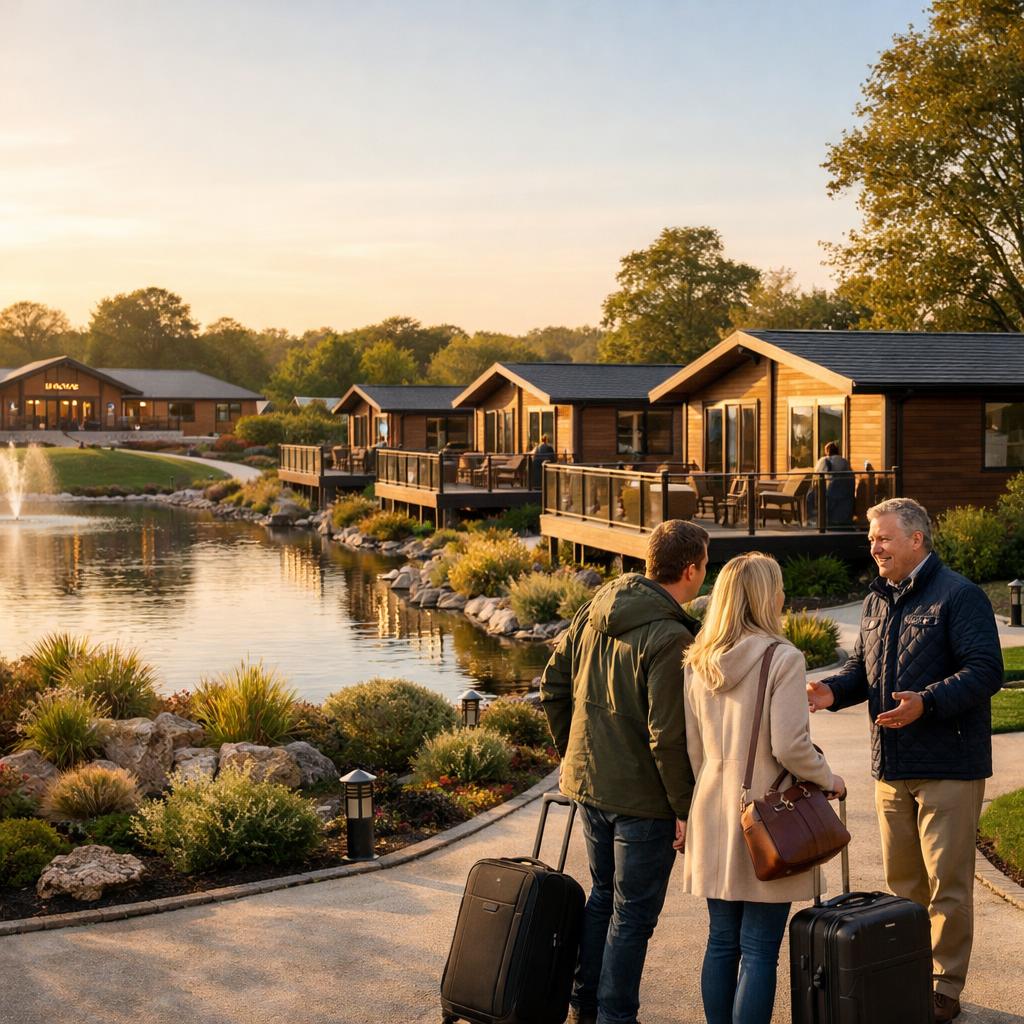
Key technical markers of a luxury lodge
Direct answer: The top technical markers include high insulation, efficient heating, sound glazing, and robust build warranties.
High-quality luxury lodges UK will typically feature a minimum of 150mm to 200mm roof insulation and wall insulation levels that exceed standard park options. Many manufacturers offer 10-year structural warranties and comprehensive boiler warranties for 2-5 years. According to manufacturers, energy-efficient heating such as LPG condensing boilers or electric heat pumps can reduce annual running costs by 15-30% when compared to older models. Additionally, look for low-emissivity glazing and A++ rated appliances in kitchen fit-outs. Practical additions like integrated storage, wider access doors, and high-spec bathrooms add to function and resale appeal.
Luxury Lodge Parks vs Standard Holiday Parks: What to Look For
Direct answer: Choose parks with robust governance, long season lengths, and on-site premium services to secure value from luxury lodges UK ownership.
A luxury park differs from a standard holiday park in service level, landscaping, and long-term management. Luxury parks prioritise design continuity, restriction of unit density, and high-quality communal facilities. For example, premium parks cap pitch density to protect views and space. Research shows parks with capped density can command up to 25% higher plot values, on average.
When you compare parks, focus on five criteria. First, park planning and covenant clarity. Second, season length and allowed holiday use—longer seasons normally translate to better rental returns. Third, on-site facilities such as spas, concierge, and dining. Fourth, maintenance standards for roads, planting and security. Fifth, the quality of neighbouring plots and resale history.
Additionally, review park rules and pitch licence details early. Approximately 60% of prospective buyers withdraw after discovering restrictive park rules. Therefore, ask for a copy of the park rules and a recent site plan. Also, request actual site fees and a schedule of recent resales on the park. This gives you realistic expectations on appreciation and liquidity.
For comparisons of parks and buying checklists, White Park Home provides practical guides. See our Buying a Lodge on a Holiday Park page for legal and fee details. Meanwhile, bookings-focused sites such as Darwin Escapes illustrate the guest-facing side of premium parks. However, note that booking-focused marketing often hides long-term ownership considerations. Consequently, inspect park governance and financial stability before you commit to luxury lodges UK ownership.
Questions to ask park owners and managers
Direct answer: Ask about site fees, covenant length, permitted use, utilities, and recent resales.
Specifically, request the most recent five resale records and the pitch fee history for the last three years. Ask whether the park has a reserve fund and who manages landscaping. Also, confirm the maximum season allowed and if subletting or holiday letting is permitted. Parks with on-site management and a capital reserve generally deliver more consistent upkeep and higher resale values for luxury lodges UK.
Premium Amenities That Matter for luxury lodges UK
Direct answer: Amenities that most improve ownership experience and resale are spas, dining, concierge, private water features, and secure parking.
Amenity quality directly affects price, rental yields, and buyer satisfaction for luxury lodges UK. Research indicates buyers will pay a 10-35% premium for parks with a staffed spa and dining options. Furthermore, 48% of purchasers say a heated indoor pool or spa is a top three deciding feature.
Focus on amenities that either drive income or enhance year-round use. A full-service spa increases off-season demand. On-site fine dining and a small food-market support longer stays. Dedicated concierge services that manage cleaning and bookings lift rental yields by as much as 15% in some parks, according to operator reports. Meanwhile, secure storage for kayaks, bikes, and garden furniture matters for active owners.
Amenities that do not always add measurable value include oversized children’s play zones where most owners are downsizers or couples. Still, family-orientated facilities matter if the park targets multi-generational owners. Check the park’s demographic profile.
Accessibility and health amenities also impact long-term living. Approximately 22% of luxury lodge buyers aged 55+ prioritise level access, wet-room bathrooms, and wider doorways. When buying, confirm whether paths and communal buildings are accessible, and whether parking is protected from the elements.
For intelligence on luxury-focused leisure operators, see examples like Away Resorts’ luxury lodge options. These sites show how premium amenity bundles are marketed to guests. Still, for ownership, ask the park to quantify how amenities affect site fees and service charges for luxury lodges UK before signing a contract.
Amenity ROI: what adds resale value?
Direct answer: Spas, concierge services, private access to water, and quality on-site dining add measurable resale value.
Spas and wellness facilities can lift desirability by up to 25% compared to parks without them. Private water access, such as lakefront or river-edge pitches, drives the largest single-location premium. In contrast, general playparks and basic gyms tend to have smaller impact on resale price. Consequently, buyers focused on long-term appreciation should prioritise parks with premium, low-density amenity plans.
Interior & Build Specs for luxury lodges UK
Direct answer: Prioritise insulation, heating, glazing, and fixed finishes; these determine comfort, running costs, and long-term value.
A clear spec checklist separates true luxury lodges UK from standard models. Core items to demand include 150-200mm roof insulation, insulated floor systems, and wall insulation to achieve U-values below 0.30 W/m2K. Triple glazing or high-performance double glazing reduces heat loss and improves acoustic comfort. Underfloor heating across the living space provides even warmth and is a common luxury expectation.
Electrical and mechanical systems matter. Ask for A++ appliances, modern condensing boilers or air-source heat pumps, and a smart thermostat with zoned controls. Energy efficiency will reduce annual running costs by approximately 15-35%, according to manufacturer claims. Additionally, plumbing should include thermostatic mixer taps and pressurised hot water systems to maintain flow rates.
Interior finishes differentiate models. Expect engineered hardwood flooring, quartz or granite kitchen worktops, solid-surface bathroom suites, and bespoke cabinetry. Lighting design, such as recessed LED downlights with dimmer switches and feature pendants, adds perceived value.
Think about build method. Timber-frame and steel-chassis builds dominate the sector. Manufacturers increasingly include structural warranties of 10 years. Ask for an itemised warranty and a service schedule. Also, confirm whether the park requires a particular finish standard for external cladding and decking.
For a visual comparison, watch a current walkthrough to check finish expectations. For example, an industry video gives a realistic view of a mid-priced premium unit. Introductory note: the following walkthrough shows practical features and common fit-outs.
<div class="se-video" style="position:relative;padding-bottom:56.25%;height:0;overflow:hidden;margin:24px 0;">
</div>
Also, compare a popular high-spec layout to see size and circulation. Introductory note: this walkthrough highlights a widely purchased 40 x 20 high-end lodge.
<div class="se-video" style="position:relative;padding-bottom:56.25%;height:0;overflow:hidden;margin:24px 0;">
</div>
Finally, keep a checklist during viewings. Include acoustic tests, draught checks, and an inspection of seals and glazing. Insist on an electrical certificate and a boiler service record before purchase.
Practical checklist: must-have specifications
Direct answer: Insulation, heating, glazing, floor finish, and warranty are the must-haves.
Before purchase, ask the manufacturer for U-values, the boiler model and efficiency, appliance energy ratings, and warranty terms. Confirm the timber treatment used in the structure and the expected maintenance intervals for external cladding and decking. A practical rule: prioritise long-term durability over short-term cosmetic extras.
Where to Find Luxury Lodge Communities in the UK (by region)
Direct answer: Luxury lodges UK communities cluster in coastal Cornwall, the Lake District, Derbyshire, Kent, and the Norfolk/Cambridgeshire fen edge.
Regions vary by scenery, planning policies, and park style. Each region attracts a different buyer profile. For example, Cornwall and Devon appeal to sea-view buyers and holiday rental owners. Research shows coastal locations often command a 20-40% price premium over inland parks. In contrast, the Peak District and Derbyshire appeal to buyers prioritising countryside access and outdoor activities.
Cambridgeshire and Lincolnshire offer pricier riverside and estuary plots which are popular for year-round residential use. For targeted regional inventories, view our local pages such as Lodges for Sale Cambridgeshire, Lodges for Sale Derbyshire, and lodges for sale Cornwall. These pages list parks, typical pitch fees, and recent availability.
If you want coastal convenience with premium parks and family leisure, Kent and Sussex offer accessible southern locations. See our Kent guide at Lodges for Sale Kent. If you prefer quieter fenland and riverfront settings, Lincolnshire and Cambridgeshire offer competitive values and good pitch sizes.
When selecting region, consider these data points: average season length varies from 8 months in inland parks to 12 months on some coastal and privately operated parks. Additionally, parks within 60 minutes of a major city typically have higher year-round demand. For comparative leisure offerings and guest-facing amenity examples, operator sites such as Hoseasons’ luxury collection show how premium locations position themselves for guests, which often mirrors owner expectations.
Choosing between coast or countryside
Direct answer: Coast tends to command higher premiums but also higher seasonal demand; countryside offers stable year-round living.
Coastal parks often have greater volatility in demand. They can deliver higher peak-season rental yields. Conversely, countryside parks attract buyers seeking permanent lifestyle change and usually have calmer resale markets. Decide whether you prioritise rental income or residential calm, then shortlist parks accordingly.
Ownership Options: holiday vs residential luxury lodges UK
Direct answer: Holiday ownership is seasonal and restrictive; residential ownership allows year-round living but is regulated differently and often costs more.
Understanding the legal difference matters. Holiday lodges UK purchases typically come with a site licence or pitch agreement. These agreements restrict permanent occupation and set season lengths. Residential park homes or permitted residential lodges are different. They allow full residential occupation and often come with longer-term tenancy rights or leasehold arrangements.
Statistically, approximately 65% of first-time lodge buyers choose holiday ownership for flexibility and lower initial cost. Around 35% of buyers choose residential park homes for long-term living. Additionally, average upfront costs for residential plots can be 10-25% higher because of planning and utility upgrades required for year-round living.
Key cost items to compare include site fees, council tax (residential) versus business rates (holiday), utility arrangement, and insurance. Also, check whether the pitch owner or park provides waste and water services. According to our ownership cost model, site fees across luxury parks typically range from £2,500 to £9,000 annually. This depends on park location, amenities, and included services. Maintenance and insurance add to the ongoing total.
If you want a step-by-step buying process, consult our practical guides such as Holiday Lodges for Sale UK and the costs breakdown at lodge ownership UK costs. These resources provide checklists for legal due diligence, financing options, and park rule reviews for luxury lodges UK.
Financing and tax considerations
Direct answer: Financing options are narrower than for bricks-and-mortar homes; compare secured loans, specialist lenders, and manufacturer finance.
Most banks treat lodges as personal property rather than real estate. Therefore, typical mortgages are not available. Specialist lenders and chattel loan providers offer financing, often requiring 10-30% deposits and shorter terms. Taxation differs too. Holiday-use properties may attract business rates or special VAT treatments when let commercially. Seek independent tax advice before purchase.
FAQs: Common Buyer Questions on luxury lodges UK
Direct answer: Below are concise answers to the most frequent questions buyers ask about luxury lodges UK ownership. Each answer starts with a direct sentence, then expands with practical details.
Q1: Is there a luxury version of Centre Parcs?
A1: Direct answer: There is no single branded luxury equivalent of Centre Parcs, but several privately owned resort parks offer similar family leisure at a higher-spec level. For example, operators such as Darwin Escapes and Away Resorts run branded parks that focus on higher-quality accommodation and expanded leisure facilities. These operators show how premium leisure and lodge specifications are combined. However, Centre Parcs is unique for its scale and woodland setting. Consequently, if you want the Centre Parcs leisure model with private ownership, look at independent upscale parks that combine spa, dining, and concierge services.
Q2: Who makes the best holiday lodges?
A2: Direct answer: ‘Best’ depends on your priorities: build quality, aftercare, customisation, or value. Leading UK manufacturers include those known for timber-frame builds and premium finishes. Industry reviews and walkthroughs, such as the Prestige Plantation tour, highlight the specific trade-offs between price and specification. When selecting a maker, request warranty terms, sample specs, and at least two reference parks where their units are installed.
Q3: What is the best alternative to Centre Parcs in the UK?
A3: Direct answer: Operators like Darwin Escapes and private boutique parks are the closest alternatives in experience. Darwin Escapes markets high-end lodge stays and curated parks. For booking-focused comparison see Darwin Escapes lodge offerings. Private parks with on-site spas and high-spec lodges replicate parts of the Centre Parcs model but differ in ownership structure.
Q4: What areas of the UK have luxury cottages?
A4: Direct answer: Luxury cottages and lodges cluster in Cornwall, the Lake District, Devon, the Cotswolds, and coastal Kent. These areas combine strong visitor demand with premium scenery. If you seek ownership, compare parks within these regions for season length, site fees, and planning constraints.
More buyer FAQs
Direct answer: Additional common questions cover maintenance, resale, and letting rules. Resale on luxury parks tends to be faster when lodges have high-spec interiors and clear covenants.
Consider practical answers. Maintenance budgets average 1-3% of the purchase price annually. Resale times vary: high-spec, well-maintained plots in desirable parks can sell within 3-6 months. Meanwhile, plots in parks with unclear rules can remain on the market for a year or more.
Enquire: Next Steps to Buy luxury lodges UK
Direct answer: Start with a shortlist of parks, request full spec sheets, and arrange an on-site viewing in season and out of season.
Book viewings early and visit at least twice. First, see the park when facilities are open. Second, visit off-peak to inspect insulation, heating and weather performance. Ask the park to provide a full price breakdown including the lodge, delivery, decking, and site fees. Also, request copies of the site rules and the last three years of service charge schedules. That data reveals cost trends and helps project future fees.
White Park Home can assist with site selection and negotiation. Begin at our homepage White Park Home and then view our lodges inventory at Lodges for Sale UK. For quick guidance on holiday vs residential purchase, read Park homes vs Holiday Lodges.
Finally, create a clear budget. Include purchase price, delivery and siting costs, connection fees, site fees, insurance, and a maintenance reserve. According to our models, a realistic first-year cost for luxury lodges UK ownership ranges from £12,000 to £35,000 when you include purchase-related expenses and the first year of running costs. Schedule a call with a specialist to go over parks that match your lifestyle and financial aims.
How White Park Home supports buyers
Direct answer: White Park Home provides park matching, specification checks, and negotiation support for buyers.
We assist clients from shortlisting through to handover. Services include arranging viewings, vetting park covenants, and reviewing warranty documentation. Use our resources and contact forms to start the enquiry process.
Key Takeaways
- Luxury lodges UK combine technical build upgrades with premium park services; demand higher insulation, glazing, and heating standards.
- Choose parks with clear covenants, capped density, and premium amenities such as spas and concierge for better resale and rental potential.
- Prioritise interior and mechanical specifications: U-values, underfloor heating, A++ appliances, and robust warranties matter most.
- Region matters: coastal parks command premiums; countryside parks offer steadier year-round living. Visit in season and off-season.
- Work with a specialist and use detailed checklists to compare parks, request resales data, and understand site fees before committing.
Frequently Asked Questions
Is there a luxury version of Centre Parcs?
Direct answer: There is no single branded ‘luxury Centre Parcs’, but privately run upscale parks replicate many of its leisure features. Private operators such as Darwin Escapes offer parks with high-spec lodges and premium leisure facilities that mirror the Centre Parcs experience. These parks often combine spa services, restaurants, and landscaped grounds. However, Centre Parcs remains unique for scale and woodland infrastructure, while private parks usually offer ownership options that Centre Parcs does not.
Who makes the best holiday lodges?
Direct answer: The ‘best’ manufacturer depends on your priorities: durability, specification, or customisation. Leading manufacturers focus on timber-frame engineering, high insulation, and premium finishes. When assessing makers, request U-values, warranty details, and aftercare. Also, visit parks where their units are already sited to inspect long-term performance. Industry walkthroughs and buyer reviews help compare real-world outcomes for luxury lodges UK.
What is the best alternative to Centre Parcs in the UK?
Direct answer: Private resort operators and boutique lodges are the closest alternatives to Centre Parcs. Operators such as Darwin Escapes and luxury-focused holiday parks provide a similar range of leisure facilities. See commercial offerings like Darwin Escapes lodge options for an example of how premium lodges and leisure are packaged for guests. If you want ownership, look for independent parks that combine spa services with lodge sales.
What areas of the UK have luxury cottages?
Direct answer: Luxury cottages and lodges commonly appear in Cornwall, the Lake District, Devon, Kent, and parts of Norfolk and Lincolnshire. These regions combine strong tourism demand with premium scenery. Each area offers different advantages: Cornwall for coastal views, the Lakes for upland landscapes, and Kent for southern accessibility. For ownership-specific listings, consult regional guides such as our Cornwall and Derbyshire pages.
Enquire now