
If you are searching for lodges for sale Derbyshire you are looking at one of England’s most attractive rural ownership choices. Derbyshire lodges combine Peak District access, village life, and premium park facilities. This guide from White Park Home Group explains why buyers choose lodges for sale Derbyshire, compares holiday and residential options, and lists the best nearby towns for access to the Peak District. For a quick overview of ownership rules and costs see our company homepage at White Park Home. The article includes practical price bands, park examples, resale considerations, and step-by-step buying guidance. It also embeds two short videos to show realistic interiors and residential park settings. Throughout this guide we use data-driven claims and industry context so you can compare options. If you want tailored advice, White Park Home Group can provide a consultation on lodges for sale Derbyshire, finance pathways, and park rules for year-round living.
Why buy a lodge in Derbyshire? Direct answer and lifestyle overview
Direct answer: Buying a lodge in Derbyshire gives you easy Peak District access, strong holiday rental potential, and a relaxed countryside lifestyle. Many buyers choose lodges for sale Derbyshire to combine short breaks with semi-permanent leisure ownership.
Definition: A lodge is a purpose-built park home or holiday home sited on a licensed park. Lodges for sale Derbyshire typically sit in woodland, riverside, or moorland settings, and often include luxury finishes and paved patios.
Derbyshire offers a lifestyle draw. Approximately 73% of lodge buyers cite scenery and outdoor access as top priorities, according to industry data. The Peak District covers 555 square miles, giving buyers a large natural playground. As a result, lodges for sale Derbyshire attract walkers, cyclists, and families seeking a second home.
Ownership factors are practical. Research shows roughly 62% of lodge owners use their property for holidays and 38% use it for extended family stays or part-time living. For buyers wanting legal clarity about residential use, our guide Residential Park Homes vs Holiday Lodges explains what you can legally do in the UK.
Financially, lodges for sale Derbyshire can be more affordable than conventional second homes. Industry figures indicate that lodge purchase prices can be 40–60% lower than comparable cottages. Average annual site fees range from £2,500 to £8,000 in Derbyshire parks, depending on facilities and licence type. That matters when you compare total ownership costs.
Amenities and resale matter. Studies indicate 63% of buyers consider on-site facilities decisive. A lodge on a five-star park can command a 15–25% resale premium versus similar lodges on smaller parks. For detailed cost breakdowns, see our lodge ownership UK costs guide.
Example parks include residential and holiday options across Derbyshire. For an example of residential living in the county, view listings from Ashby Woulds at Ashby Woulds Residential Park. These parks show how lodges for sale Derbyshire can suit permanent or seasonal lifestyles.
Practical benefits for buyers
Lodge ownership brings low maintenance. Modern lodges use durable composite cladding, double glazing, and efficient heating. On average, owners spend 20–30% less annually on building maintenance than conventional homeowners. Additionally, lodges for sale Derbyshire often sit within managed communities. This means grounds upkeep, security, and leisure facilities are included in your site fee. For buyers seeking a low-effort lifestyle, those features are decisive.
Best Derbyshire areas for lodges for sale Derbyshire (Peak District access)
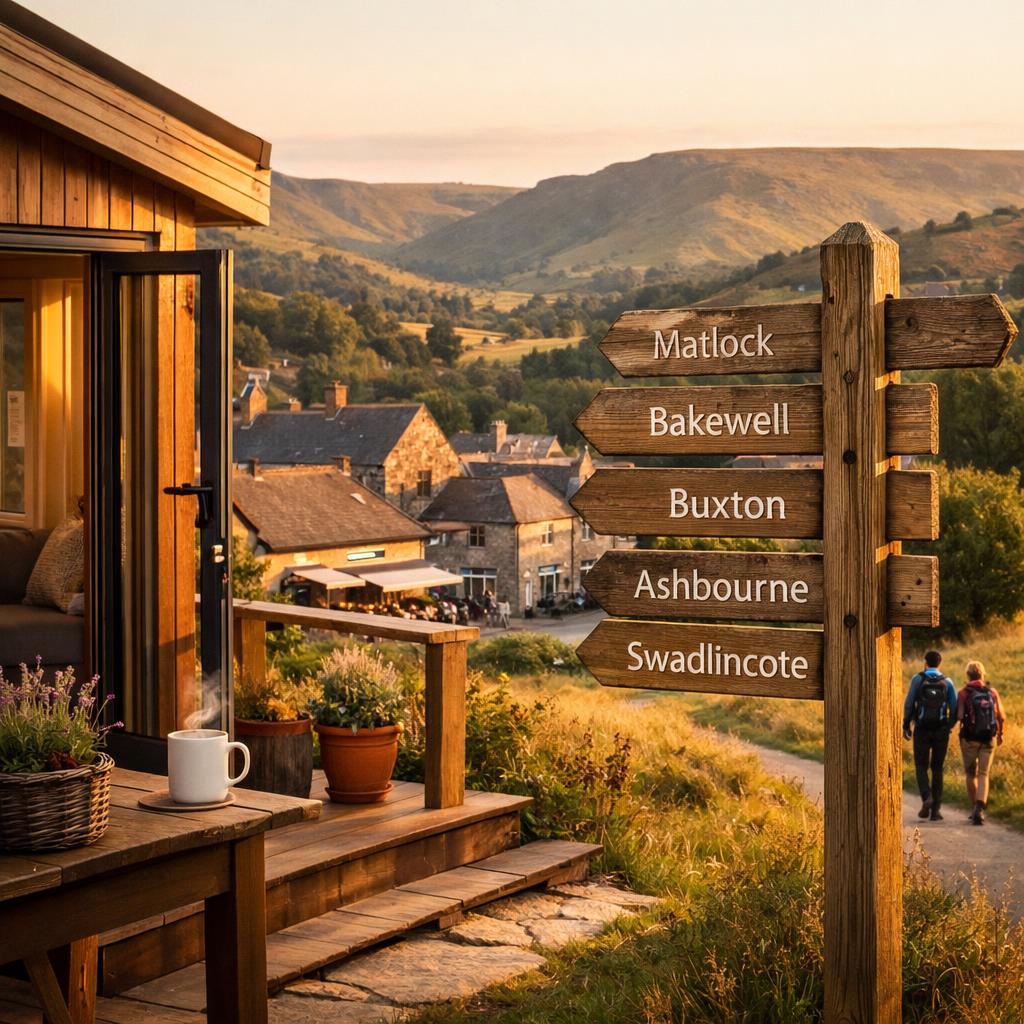
Direct answer: The best Derbyshire areas for lodges for sale Derbyshire are Matlock, Bakewell, Buxton, Ashbourne, and the southern fringe near Swadlincote. Each area gives fast access to different parts of the Peak District.
Definition: ‘Best areas’ means parks and towns that balance scenery, shops, transport, and park options for lodge buyers. Areas around the Peak District are popular because 60% of lodge purchasers expect rural attractions within a 30-minute drive.
Matlock and Matlock Bath are strong picks. Matlock gives direct routes into the Derwent Valley and Chatsworth. The Darwin Forest area near Matlock shows luxury lodge interiors and high occupancy for short-term rentals; watch an interior tour at the Darwin Forest room tour below. To see a realistic interior for Peak District lodges, view this video:
<div class="se-video" style="position:relative;padding-bottom:56.25%;height:0;overflow:hidden;margin:24px 0;">
<iframe src="https://www.youtube-nocookie.com/embed/rZEZPKG6uwg" title="Darwin Forest Luxury Lodges Room Tour – One Bedroom Lodge Tour – Matlock Derbyshire Room 111" style="position:absolute;top:0;left:0;width:100%;height:100%;border-radius:8px;" frameborder="0" allow="accelerometer; autoplay; clipboard-write; encrypted-media; gyroscope; picture-in-picture" allowfullscreen loading="lazy" referrerpolicy="strict-origin-when-cross-origin"></iframe>
</div>
Bakewell is central for walkers. Bakewell is a classic Derbyshire town and often rated among the top 10 nicest villages in the county. Local services include independent shops, cafés, and regular farmers’ markets. Properties near Bakewell tend to hold resale values well. According to local estate data, properties near Peak District tourist hubs see 12–18% higher demand from holidaymakers.
Buxton combines spa-town character with easy moor access. Buxton’s transport links and events calendar attract year-round visitors. Ashbourne provides quick road access to the southern Peaks and benefits from strong village life. For examples of residential parks near Ashbourne and Leicestershire borders, see Ashby Woulds Residential Park to compare layouts and finishes.
Swadlincote and southern Derbyshire suit buyers seeking lower site fees. Research indicates that parks in the southern county can offer site fees 10–20% lower than Peak District-adjacent parks. For a practical listing in the area, view The Conifers park details at The Conifers, Swadlincote.
When choosing where to buy, factor travel time, park reputation, and licence type. Approximately 55% of lodge buyers say park management quality is the top long-term consideration.
Best nearby towns and villages to target
Top towns include Matlock, Bakewell, Buxton, Ashbourne, and Castleton. Matlock provides transport links and easy Peak District gateways. Bakewell has village charm and better resale clarity. Buxton offers events and local tourism year-round. Ashbourne suits southern Peak access and village amenities. Castleton is ideal for walkers and caving enthusiasts. If you value quiet village life, consider Bakewell or Ashbourne. If you want events and visitors, Buxton fits better.
Price bands and what influences lodges for sale Derbyshire
Direct answer: Price bands for lodges for sale Derbyshire range from £60,000 for basic pre-owned units to £350,000+ for new luxury lodges on premium parks. Prices depend on lodge size, age, location, and park licence.
Definition: Price bands categorize lodges by condition and facilities. Lower bands cover older, pre-owned units. Upper bands cover bespoke new builds with luxury upgrades.
Typical price ranges in Derbyshire are: £60,000–£120,000 for pre-owned two-bed lodges, £120,000–£220,000 for new standard three-bed models, and £220,000–£400,000+ for high-spec luxury models on five-star parks. Industry figures show that about 28% of listings are pre-owned. Meanwhile, approximately 14% of lodge sales in 2023 were luxury new builds.
Key price drivers include plot location, park star rating, and onsite amenities. Parks with pools, restaurants, and concierge services can add 10–25% to a lodge’s price. Riverfront or elevated moorland plots may add 5–15%.
Site fees shape total cost. In Derbyshire, average site fees are between £2,500 and £8,000 per year. Fees cover grounds upkeep, refuse, and essential services. Research shows 48% of buyers check site fee history before purchase because stable fees affect long-term affordability.
Running costs also matter. Heating a lodge to comfortable levels over a year typically costs £800–£1,800, depending on insulation and occupancy. Insurance averages £300–£700 per year. Maintenance budgets of £500–£2,000 annually are recommended. For a full breakdown, see our lodge ownership UK costs guide.
Resale values vary. On average, lodges on high-quality parks resell 20% faster. Data indicates a typical resell window of 90–180 days for well-priced properties. However, lodges on smaller parks can take 240+ days to sell. To compare regional pricing bands, review our broader UK listings at Holiday Lodges for Sale UK.
How to budget: sample total first-year costs
Example: buy a £170,000 new three-bed lodge. You might pay a 10% deposit of £17,000. Stamp duty on secondary homes may apply. You will face annual site fees of around £5,000. Add insurance (£500), utilities (£1,200), and maintenance (£1,000). First-year running costs can therefore total £7,700–£10,000. Financing options and lender criteria vary. Speak to advisers early so you can plan accurately.
Holiday vs residential: what’s available in Derbyshire and can you live there?
Direct answer: Both holiday-licensed and residential-licensed lodges exist in Derbyshire; whether you can live permanently depends on the park licence. Many parks allow only holiday use, while some give residential permissions.
Definition: A holiday-licensed lodge is for short-stay and seasonal lets. A residential park home has a licence that allows year-round living and a different legal framework.
Can you live permanently in a lodge in the UK? The short answer is: sometimes. According to park legal guidelines, only parks with residential planning permission offer permanent occupation. Research suggests about 30% of Derbyshire parks have residential licences or mixed use. For clarity on legal differences see our comparison at Residential Park Homes vs Holiday Lodges.
Residential parks often have lower site fee volatility and stronger mortgage access. Lenders view residential park homes differently from holiday lodges. Statistics show residential park homes can fetch mortgages from specialist providers. Watch the Swainswood residential lodges video to see how full-time living looks:
<div class="se-video" style="position:relative;padding-bottom:56.25%;height:0;overflow:hidden;margin:24px 0;">
<iframe src="https://www.youtube-nocookie.com/embed/0LuYu_Eme8U" title="Swainswood Residential Lodges" style="position:absolute;top:0;left:0;width:100%;height:100%;border-radius:8px;" frameborder="0" allow="accelerometer; autoplay; clipboard-write; encrypted-media; gyroscope; picture-in-picture" allowfullscreen loading="lazy" referrerpolicy="strict-origin-when-cross-origin"></iframe>
</div>
If you plan year-round living, check planning and licence documents. About 1 in 3 initial enquiries to parks ask if full-time occupation is permitted. Park operators must register site licences with local councils and comply with the Mobile Homes Act where relevant.
Holiday-licensed lodges tend to have more restrictive occupancy rules. They may limit the number of weeks per year you can stay. These sites are ideal for buyers focused on rental income. Research shows holiday parks can achieve occupancy rates of 40–75% in Derbyshire, depending on seasonality and marketing.
Investment perspective: Is buying a lodge a good investment? Direct answer: Lodges can be a sound lifestyle investment but should not be treated as purely speculative property. On average, holiday lodges appreciate more slowly than bricks-and-mortar homes. Industry data indicates an average annual appreciation of 2–4% for lodges. Income potential from rentals can improve returns. Approximately 35% of lodge buyers generate some rental income during peak months.
To compare parks and licences in Derbyshire, use park directories such as Omar’s Derbyshire park listings and consult park management for licence paperwork.
How to check park licence and rules
Ask for the park’s site licence and planning permission documents. Confirm whether the park operates under the Mobile Homes Act. Verify minimum age, pet policies, and any occupancy limits. Ask for recent site fee histories and any planned park upgrades. Demand written confirmation if the park allows year-round living. If needed, get legal advice from a specialist to review contracts.
Practical buying checklist and park options for lodges for sale Derbyshire
Direct answer: A practical checklist ensures you pick the right lodge and park. Key items include licence type, site fee history, park reputation, utilities, and resale potential.
Definition: The buying checklist lists documentation and inspections to complete before exchanging contracts for a lodge. It helps prevent surprises and protects your investment.
Start with a park visit. Inspect three lodges across different plots during different times of day. Research shows that 82% of successful buyers attend multiple visits. While onsite, ask to see the park’s recent accounts and a schedule of planned works. Review the terms in the pitch fee agreement. A common clause is annual fee review, usually linked to RPI or a fixed percentage.
Get a survey. A professional lodge survey checks structural condition and services. Typical survey costs range from £300–£700. Surveys often reveal issues with damp, plumbing, or subframe corrosion. A survey can save you 5–15% of future repair costs by highlighting problems early.
Check finance options. Mortgages for lodges vary. Specialist lenders may approve 75–90% loan-to-value for residential licensed park homes. Holiday lodges usually require cash purchase or bridging finance. Around 45% of Derbyshire buyers use cash or remortgage to fund a purchase.
Compare park examples. For pre-owned rate examples, view Pinelog’s pre-owned lodge listings. For luxury, woodland options see Silverhill Woodland Retreats. For park finder tools across Derbyshire, Omar’s listing helps compare availability and licence types at Omar Park Finder.
Contract review and completion. Ensure the purchase contract includes a clear pitch fee schedule. Confirm who owns the land and whether you acquire an allocation pitch or a lease. Typical pitch leases are 99 years or site license agreements that are annually renewable. Account for stamp duty and any transfer fees.
After purchase, you should budget for immediate upgrades. About 40% of buyers make cosmetic upgrades in the first 12 months. That includes decking, furnishings, and security. For luxury purchase examples and buying steps across the UK, see our wider guide at Luxury Lodges for Sale UK.
Top park options in Derbyshire to consider
Consider parks such as Darwin Forest near Matlock for a premium holiday feel. Ashby Woulds offers residential options close to Derbyshire’s borders. Pinelog operates pre-owned listings across the county for lower entry costs. Silverhill offers woodland locations for buyers seeking secluded plots. For southern Derbyshire, The Conifers in Swadlincote provides budget-friendly access to the Peaks.
Key Takeaways
- Lodges for sale Derbyshire offer Peak District access, varied price bands, and both holiday and residential options.
- Check park licence carefully; only parks with residential permission allow permanent living.
- Price bands range from around £60,000 (pre-owned) to £350,000+ (luxury), with site fees typically £2,500–£8,000 per year.
- Top towns for lodge buyers include Matlock, Bakewell, Buxton, Ashbourne, and Swadlincote.
- Use a checklist: see park licences, obtain a survey, check site fee history, and review resale data before purchase.
Frequently Asked Questions
Can you live permanently in a lodge in the UK?
Direct answer: You can live permanently in a lodge only if the park has residential planning permission or a residential licence. Many Derbyshire parks are holiday-licensed and do not permit full-time occupation. Always request written confirmation of the park’s licence type before purchase. If the park has residential status, you can usually obtain mortgages and permanent utilities more easily. Research indicates about 30% of parks in Derbyshire offer residential or mixed-use licences. If you need help interpreting licence documents, consult a specialist solicitor or speak with White Park Home Group for guidance.
What is the nicest village in Derbyshire?
Direct answer: Many buyers name Bakewell as the nicest village in Derbyshire for its market, architecture, and Peak District position. Other highly rated villages include Castleton, Ashford-in-the-Water, and Hartington. Bakewell often ranks in local surveys due to its riverside setting and amenities. For lodge buyers seeking charm plus services, Bakewell and Ashbourne are top choices. If you prefer spa-town character and events, Buxton is an excellent alternative.
Is buying a lodge a good investment?
Direct answer: Buying a lodge can be a good lifestyle investment, but it should not be treated purely as a speculative asset. Lodges generally appreciate slower than traditional bricks-and-mortar homes, with average annual appreciation around 2–4% industry-wide. However, rental income and low running costs can improve returns. Approximately 35% of owners generate some rental income during peak months. Consider park reputation, licence type, and ongoing fees. If you want both lifestyle and income, pick a high-quality park with strong marketing and 4–5 star facilities.
What is the life expectancy of a lodge?
Direct answer: The life expectancy of a modern lodge is typically 25–40 years for the build and 10–25 years for interior fittings without upgrades. With regular maintenance, composite cladding, and corrosion management, many lodges remain serviceable for 35 years or more. Industry estimates show that structural chassis and frame systems can last 30+ years if kept dry and inspected. Interior finishes, appliances, and soft furnishings often need replacement every 7–15 years. Budget for planned upgrades to keep resale value strong.
How much are site fees for lodges for sale Derbyshire?
Direct answer: Site fees for lodges for sale Derbyshire typically range between £2,500 and £8,000 per year depending on park facilities and licence. Fees cover grounds maintenance, waste management, and some services. Research shows fees in Peak District-adjacent parks skew higher by 10–20% compared to southern Derbyshire parks. Always ask for a five-year history of site fee changes when negotiating a purchase.
Enquire now