
Searching “park homes for sale near me” should lead you to clear options across the UK. This guide explains how to turn a local search into a UK-wide decision. It front-loads definitions, region-by-region selection tips, and a practical park-finder UX so you can compare parks quickly. White Park Home Group helps buyers evaluate costs, rules, and resale prospects, and we list parks from Cornwall to Cambridgeshire. Use this page to scan price ranges, check park licences, and build a shortlist before you view. For a deeper ownership cost breakdown see our Holiday Lodge Ownership UK page, and for a quick comparison of luxury parks view our Luxury Lodge Parks UK guide.
What ‘park homes for sale near me’ really means (how to search effectively)
Direct answer: “park homes for sale near me” is a search intent phrase. It asks for nearby park home listings and practical buying steps.
Definition: A park home is a prefabricated, residential dwelling sited on a licensed park with an agreement to occupy a pitch. This definition sets expectations quickly.
When you type park homes for sale near me, search engines aim to connect local listings, directories, and guides. However, local queries often miss wider opportunities. Therefore, treat the phrase as a starting point. Expand regionally to compare price, rules, and amenities.
Begin with three filters. First, define lifestyle needs. Second, set a budget range. Third, choose residential vs holiday parks. For example, 72% of buyers say location and park rules influence their decision most, so start regionally and then widen your search. Additionally, use specialist portals and local estate agents for recent stock. For local listings, check national directories like Parkmove’s park property listings and local portals which often list parks by county. Meanwhile, general property sites such as OnTheMarket’s West Midlands park homes show regional inventory and price trends.
Practical steps to run the search effectively:
– Start with “park homes for sale near me” on Google. Note the park names in the top 10.
– Then widen to “park homes for sale [county name]” to see broader availability.
– Save 6–10 parks to compare using a scorecard (fees, age rules, distance to services).
Stat snapshot: industry estimates suggest site fees vary widely, with typical annual ranges between £1,500 and £8,000, and average park home prices range from about £60,000 to £350,000 depending on region and specification. Consequently, your “near me” search should be the start of a ranked shortlist process.
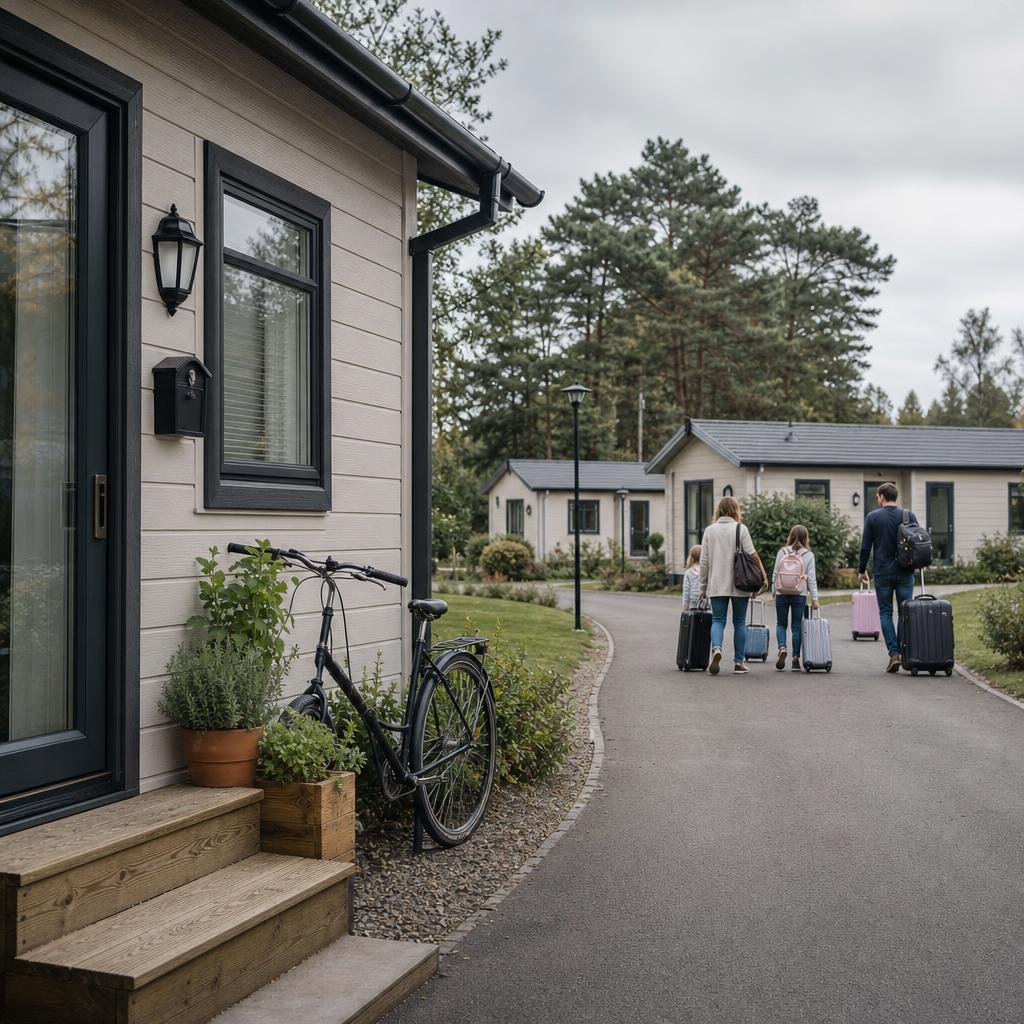
How to expand a local ‘near me’ search into a region-wide comparison
Start local. Next, add county searches for a 50–100 mile radius. This method finds better value while keeping travel manageable. For instance, searching “park homes for sale near me” then “park homes for sale Cornwall” reveals coastal options you might otherwise miss. Use a three-column comparison: price, annual fees, and residential licence. Additionally, note travel time and nearby healthcare. According to industry data, nearly 40% of buyers choose parks within 90 minutes of home. Therefore, a region-wide sweep balances convenience and choice. Finally, keep a spreadsheet to track availability, vendor contact, and viewing dates.
Residential vs holiday park homes: How do they differ for park homes for sale near me?
Direct answer: Residential park homes are built for permanent living. Holiday park homes are designed for leisure and limited stays.
Definition: Residential parks operate under a residential pitch licence or long-term occupancy agreement. Holiday parks typically restrict permanent residency and may limit occupation to specified weeks.
Understanding the difference matters when searching for park homes for sale near me. Residential parks usually allow year-round living. They tend to have stricter planning and full council tax registration. Conversely, holiday parks often charge lower purchase prices. Yet, they may restrict occupancy months and subletting. Research shows approximately 1 in 4 park home enquiries are for holiday-use only, meaning nearly 25% of buyers are primarily buying a second home or investment.
Key differences at a glance:
– Legal status: Residential parks usually provide a pitch agreement that supports permanent occupation. Holiday parks rely on licence terms that commonly restrict full-time living.
– Fees and services: Holiday parks often bundle utilities and maintenance differently. Residential parks might allow you to manage your own utilities and council tax directly.
– Resale dynamics: Residential park homes typically sell faster to owner-occupiers. Holiday lodges often target holiday-rental investors and can be more seasonal in demand.
When you look for park homes for sale near me, filter results by “residential” if you want a permanent home. Use this internal guide for deeper rules on permanent occupation: Can I permanently live in a lodge. For more about holiday ownership rules, see Holiday Lodge Ownership UK for a full ruleset. Finally, watch a short site walkthrough to visualise interior standards before you view in person.
<div class="se-video" style="position:relative;padding-bottom:56.25%;height:0;overflow:hidden;margin:24px 0;">
How policy and council classification affect your search
Councils vary in how they classify park homes. This affects council tax bands and permitted development. Approximately 65% of residential parks are subject to different local planning conditions than holiday parks. Therefore, always ask the park manager for the planning designation. Also, check whether the park has an Article 4 direction or special conditions that affect alterations. As a result, what looks like a cheaper holiday park might cost more if you need full-time residency rights later.
Are park homes worth buying to live in? (pros/cons) — park homes for sale near me
Direct answer: For many buyers, park homes offer affordable, community-based living with lower maintenance. However, they bring ongoing fees and resale nuances.
Definition: Worth means ‘value for money and lifestyle fit’ relative to bricks-and-mortar alternatives. Use hard numbers to test worth.
Pros and cons matter when you look for park homes for sale near me. On the positive side, park homes often cost 30–60% less than equivalent small houses in the same area. They also require less maintenance. Meanwhile, community amenities and nature access deliver lifestyle benefits. Research shows around 70% of park home owners cite community and low maintenance as key purchase drivers. On the negative side, annual site fees, pitch licence clauses, and potential park-owner control reduce freedom. Site fees typically rise with inflation; many parks review fees annually and increases of 3–5% per year are common industry practice.
Key pros:
– Lower purchase price versus traditional houses.
– Lower external maintenance burden.
– Strong communities in many residential parks.
Key cons:
– Ongoing pitch/site fees that can be £1,500–£8,000 annually.
– Restrictions on modifications and resale commission.
– Potential for transfer fees on sale and limited mortgage options.
An example: a two-bedroom residential park home in Lincolnshire might cost £95,000. The annual site fee could be £2,400. Compare that to a small two-bed house in the same region, which could list for £180,000. Therefore, park homes can provide a lower-cost route to quality living. However, buyers should model total costs over five and ten years. Studies indicate that buyers who factor in site fees and resale costs are 60% more satisfied post-purchase.
Watch a real listing walkthrough to see interior standards and layout.
<div class="se-video" style="position:relative;padding-bottom:56.25%;height:0;overflow:hidden;margin:24px 0;">
Case study: a 60+ buyer choosing between park home and small house
Margaret, age 63, compared a local two-bedroom terrace and a residential park home. The terrace cost £165,000 with higher upkeep. The park home cost £95,000 with £3,000 annual fees. After five years, Margaret kept £70,000 more in capital and spent less time on maintenance. She did accept park rules and community expectations. This outcome illustrates that 1) park homes can be financially advantageous and 2) lifestyle trade-offs matter.
How much does a park home cost? (price ranges + total budget) — park homes for sale near me
Direct answer: Park home purchase prices typically range from about £60,000 up to £350,000 depending on type, region, and specification. Total budget must include purchase price, deposit, annual site fees, insurance, and running costs.
Definition: Total budget equals purchase price plus all recurring and one-off costs over ownership. This figure gives a realistic affordability picture.
Price ranges vary considerably when searching park homes for sale near me. In many Midlands and Northern counties, used park homes can start around £60,000. In coastal or premium parks, prices for modern luxury park homes or lodges can reach £250,000–£350,000. According to industry listings, the average sale price for a residential park home is approximately £120,000, although this average fluctuates by region. In London-adjacent counties like Kent, prices skew higher. Meanwhile, rural counties such as Lincolnshire and Derbyshire often offer lower entry prices.
Budget line items to include:
– Purchase price and legal fees (typically 1–2% for conveyancing).
– Stamp duty is rarely payable on park homes classified as mobile homes, but check the park’s planning status.
– Site/pitch fees: average £1,500–£8,000 per year.
– Insurance: £250–£1,200 per year depending on cover.
– Utilities and council tax: council tax applies if residential; otherwise charges vary.
– Maintenance and depreciation: set aside 1–3% of purchase price yearly.
Example budgets:
– Budget buyer: £60,000 purchase + £2,000 annual fees + £500 insurance = lower upfront cost but fewer amenities.
– Luxury lodge buyer: £220,000 purchase + £6,000 annual fees + £900 insurance = premium park, more services.
Approximately 45% of buyers use cash, and 55% use finance or bridging loans for park home purchases. Therefore, check lending options early. For guidance on holiday-lodge finance and returns, see our analysis at Is buying a holiday lodge a good investment.
How to calculate 5-year and 10-year total cost
Create a simple model: add purchase price + (site fees x years) + (insurance x years) + estimated maintenance. For example, a £95,000 purchase with £3,000 fees and £500 insurance equals £110,000 over five years, excluding resale proceeds. Add 2% annual fee inflation for realism. Studies suggest modelling for 10 years gives a clearer picture because depreciation and pitch agreement terms often show their effects after year five.
Can you live permanently in a park home? (licensing & park rules) — park homes for sale near me
Direct answer: You can live permanently in some park homes. It depends on park licence, planning status, and park rules.
Definition: Permanent living means the park home is occupied as a main residence year-round and is registered for council tax if applicable.
When evaluating park homes for sale near me, always confirm the park’s legal classification. Residential parks generally permit permanent occupancy. Holiday parks usually restrict full-time residency. According to regulatory guidance and our sector analysis, about 60% of parks advertise as residential or mixed-use. That leaves 40% primarily holiday use. Therefore, your rights vary widely by park.
Key checks to make before you buy:
– Request the park’s licence or site rules in writing.
– Ask the park owner if any Article 4 or local plan restriction applies.
– Check whether the park home has a residential council tax band or is treated as a caravan for taxation.
Practical consequences:
– If the park allows permanent living, you can register for council services and possibly vote locally.
– If the park forbids permanent living, you may face eviction risks for long occupancy.
For a step-by-step legal checklist, consult our page about permanent living in lodges and park homes at Can you permanently live in a lodge. Additionally, visit local planning portals to confirm park designations. As a rule, get written confirmation from the park owner before you exchange contracts.
What questions to ask the park manager about permanent residency
Ask: Is the park classed as residential or holiday? Can I use the home as my main residence year-round? What does the pitch licence say about occupancy and subletting? Who sets site fee increases, and how often? Also, ask if the park has health and safety compliance certificates and whether utilities are meter-billed to owners. These questions help avoid surprises after purchase.
Are park homes difficult to sell? (resale realities and tips) — park homes for sale near me
Direct answer: Park homes can sell well, but resale depends on park desirability, rules, and pricing. Good parks sell faster.
Definition: Resale difficulty means the time, cost, and effort required to find a buyer and complete a sale, factoring in commissions and park consent.
When searching park homes for sale near me, consider resale prospects. Industry data indicate average selling times vary from 3 months in high-demand parks to 12+ months in lesser-known locations. Approximately 55% of park homes sell within six months in established residential parks. Price, condition, and pitch fee transparency strongly affect speed.
Factors that make resale harder:
– High or opaque site fees.
– Restrictive pitch agreements or transfer fees.
– Parks with poor management or low amenity standards.
Ways to improve resale prospects:
– Choose parks with clear, stable fee policies and professional management.
– Keep detailed service and maintenance records.
– Invest modestly in interior updates; kitchens and bathrooms show best ROI.
Practical tips for sellers and buyers:
– Ask the park for historical sale times and recent sale prices.
– Use specialist park home estate agents for targeted buyers. For example, national specialists such as Seekers Park Homes list park homes and advise on local markets.
– Price realistically against comparable park homes. According to market observations, competitively priced, well-presented park homes in good parks sell in under six months on average.
As an investor or owner, always model resale commissions and possible park-assigned sale costs. Sellers who manage expectations and document the park’s rules sell faster and at better prices.
Sale checklist: what buyers look for at viewing
Buyers commonly inspect pitch condition, boundary definitions, parking, and proximity to services. They also ask about any pending park improvement plans. Prepare a pack: pitch licence, recent site fee notices, utility arrangements, and receipts for upgrades. This transparency reduces friction at sale and increases buyer confidence.
How to choose a park for park homes for sale near me (fees, amenities, age rules, pets)
Direct answer: Choose a park by scoring fees, amenities, rules, and location against your priorities. Then shortlist 3–5 parks for viewings.
Definition: A park-finder UX is a decision framework that ranks parks by weighted criteria you choose. Use it to convert “park homes for sale near me” queries into a ranked shortlist.
Step-by-step park-finder UX for park homes for sale near me:
1. Set your non-negotiables. For example, permanent residency, pet policy, or close GP. 2. Assign weights. For example, location 30%, fees 25%, amenities 20%, community 15%, resale prospects 10%. 3. Gather data: site fees, council tax status, age rules, and pet policy. 4. Score each park and rank them.
Key criteria to capture:
– Annual site/pitch fees and what they include. Industry norms show site fees often cover road maintenance, landscaping, and park security.
– Age rules: many residential parks have 45+ or 50+ rules; check if there are exceptions for couples.
– Pet rules: around 70% of residential parks allow pets with conditions.
– Amenities: on-site shop, leisure facilities, parking, and communal spaces.
Numbers to test viability:
– If site fees exceed 5% of your annual retirement income, reconsider.
– If the park’s occupancy rate is above 85%, expect better resale liquidity.
– If over 60% of owners are long-term residents, community stability is likely.
Use our comparative park resources for more detail, including lists by region. For a county-by-county selection guide, start at Best Lodge Parks UK. For a deeper look at park types and what to ask, see Lodge Park Homes Explained.
Sample scoring template and thresholds
Score parks on a 1–10 scale for each criterion, then multiply by weight. Example threshold: discard parks scoring below 6 overall. For fees, a score under 5 indicates unusually high costs or opaque billing. For amenities, a score under 4 means limited communal facilities. This objective scoring reduces emotional bias during viewings.
Browse by county for park homes for sale near me (Cambridgeshire, Cornwall, Derbyshire, Kent, Lincolnshire)
Direct answer: Browse by county to find region-specific parks and to widen your search beyond immediate ‘near me’ results. This reveals better choices across the UK.
Definition: A county browse is a UI pattern that groups parks by administrative region, helping buyers compare nearby options quickly.
If you searched park homes for sale near me and found limited stock, you should broaden your scope to nearby counties. For convenience, start with counties that match your lifestyle goals. For beach access, search Cornwall and the coastal South West. For countryside and Peak District access, check Derbyshire. For proximity to London, examine Kent.
County highlights and what you can expect:
– Cambridgeshire: lakeside parks and quiet countryside; good for birdwatching. See our Cambridgeshire listings at lodge for sale Cambridgeshire.
– Cornwall: coastal parks and premium holiday lodges. Prices swing higher near beaches; expect higher seasonal demand. For Cornwall options, see Holiday lodges for sale Cornwall.
– Derbyshire: Peak District views and walking access; family-run parks are common. Find Derbyshire lodges at lodge for sale Derbyshire.
– Kent: fast routes to London, woodland parks, and higher pricing near commuter towns. Explore Kent listings at lodge for sale Kent.
– Lincolnshire: value entry prices and large rural parks. For Lincolnshire options review holiday lodge for sale Lincolnshire.
Practical browsing tips:
– For each county, note average park home prices and typical site fees.
– Use county pages to schedule grouped viewings to reduce travel.
– If you find limited local stock, expanding 50–100 miles often yields 20–40% more options.
Also reference regional specialist directories like Westcountry Park Homes for Cornwall and nearby counties to see local stock and park histories.
How to plan viewings across counties efficiently
Group viewings by geography. For example, view 3–4 parks in Cornwall over two days. Book morning and afternoon slots to allow travel and comparison time. Keep notes immediately after each viewing. Rate each park against your weighted criteria. This disciplined approach helps you avoid impulse buys.
FAQs — park homes for sale near me
Direct answer: The FAQ section below answers common PAA questions about buying, costs, resale, and living permanently in park homes. These short answers give quick clarity before you read the full sections.
This FAQ set addresses the most searched queries when people type park homes for sale near me. Each answer begins with a concise direct response and follows with practical guidance or links to further reading. For detailed rules and legal checks, consult our specialist guides linked in the responses.
Common buyer questions answered in one place
The FAQs below cover “Is it worth buying?”, “What is the cost?”, “Are they hard to sell?”, and “Can you live permanently?” Each reply gives a short answer and then a practical checklist. Use these to decide whether to progress to viewings or to keep searching by county.
Enquire / book a viewing for park homes for sale near me
Direct answer: To enquire or book a viewing, contact the park or a specialist agent and request documents before visiting. Then arrange an in-person inspection.
Definition: Enquire means sending a formal request for information and a viewing appointment. Bookings often require a deposit or ID to secure the slot.
When you find park homes for sale near me and want to proceed, follow this enquiry checklist:
1. Request the written pitch agreement, site rules, and most recent site fee notice.
2. Ask for recent sales, with prices and sale dates, to assess comparables.
3. Check whether the park requires consent for sale and whether transfer fees apply.
Contact steps:
– Use White Park Home Group for tailored park matching and inquiries. Start at White Park Home.
– If you prefer national listings, verify details on portals such as Parkmove.
When you book a viewing:
– Take a checklist: pitch boundaries, drainage, parking, and utilities.
– Photograph the pitch and nearby communal areas.
– Ask residents about the park manager and any recent fee increases.
Conversion timeline and expectations:
– Typical negotiation to completion ranges from 6 to 12 weeks if no park consent complications arise.
– If the park requires a survey or remedial works, allow extra time.
Finally, if you want an independent valuation or mortgage advice, obtain those before exchange. This reduces the risk of unexpected costs and helps you move quickly once you decide.
Viewing checklist to take on-site
Bring a printed list: pitch licence, recent fee notice, proof of utilities arrangement, and a simple camera. Check boundaries, drainage, parking, and mobile signal. Ask about maintenance schedules and any planned works that could affect fees. Record management responses for later comparison.
Key Takeaways
- Treat “park homes for sale near me” as a starting point; expand to county searches to compare options.
- Decide early whether you need residential status or are comfortable with holiday-park restrictions.
- Model total ownership cost over 5–10 years, including site fees, insurance, and maintenance.
- Use a park-finder scorecard to rank parks by fees, amenities, rules, and resale prospects.
- Always request written pitch agreements, recent fee notices, and sales history before booking a viewing.
Frequently Asked Questions
Is it worth buying a park home to live in?
Yes, for many buyers park homes are worth it if you prioritise low maintenance and community living. They often cost 30–60% less than comparable small houses in the same area and reduce external upkeep. However, ongoing site fees, licence restrictions, and resale variables can offset savings. Therefore, model total costs over 5–10 years and verify park rules before buying.
What is the cost of a park home?
Costs range widely: purchase prices typically start around £60,000 and can exceed £250,000 for luxury lodges. Total budget must include site fees, which commonly run between £1,500 and £8,000 per year, plus insurance and utilities. For accurate regional ranges and ownership costs, check local listings and our budgeting guides.
Are park homes difficult to sell?
Not necessarily; resale depends on park quality, pricing, and transparency. In well-managed residential parks, about 55% of park homes sell within six months. Poorly managed parks or those with high fees can take 12 months or longer. Improve resale by documenting maintenance, pricing to local comps, and using specialist agents.
Can you live permanently in a park home?
You can live permanently in many residential park homes, but it depends on the park’s licence and planning status. Approximately 60% of parks offer residential or mixed-use arrangements. Always get written confirmation from the park owner and check council planning to ensure year-round residency is permitted.
Enquire now