
If you are searching for a lodge for sale cambridgeshire, this guide gives a direct, availability-first view. White Park Home Group helps buyers find luxury lodge and park home ownership across Cambridgeshire. Front-loaded here are what’s currently on the market, price guidance, park comparisons, and the quickest way to enquire. For an immediate overview of our services and partner parks, visit the White Park Home homepage. This page prioritises listings, practical buying steps, and site-level rules so you can act fast when a suitable lodge for sale cambridgeshire appears. Expect clear next steps, data-driven context, and a short viewing checklist. If you want direct help matching to a park or arranging a viewing, contact our team after reviewing the availability notes below.
lodge for sale cambridgeshire: What’s available and how to enquire
Direct answer: There are new and resale lodges listed across riverside and lakeside parks in Cambridgeshire right now. To enquire, contact White Park Home Group or the park sales office and request exact availability and a viewing slot.
What’s available now: As of recent market checks there are approximately 20–40 active listings countywide. Listings include new-build luxury models and pre-owned park lodges. Typical sizes range from 28 x 12 to 45 x 22 and layouts offer one to three bedrooms. Average asking prices in Cambridgeshire are approximately £120,000 to £450,000 depending on size, finish, and location. According to park data, around 30% of current listings are available for immediate siting within 30 days, meaning a fast purchase pathway exists for motivated buyers.
Where to look: Riverside and private-gated parks are common. For example, Riverside Park in Ely lists holiday lodges openly through estate portals and park agents; see this local listing for a practical example at Riverside Park, Ely. Additionally, luxury lodge operators around Cambridge show premium models and floorplans; review models at Cambridge Country Club for quality benchmarks.
How to enquire: 1) Prioritise the exact lodge by park and plot number. 2) Ask for the park’s rules summary and site fee schedule. 3) Request a copy of the lodge specification and any warranty documentation. 4) Book an accompanied viewing and a second independent inspection if the lodge is pre-owned.
Next step micro-CTA: If you want a curated shortlist of every current lodge for sale cambridgeshire matched to your budget and lifestyle, contact White Park Home Group now and we will send a tailored availability list within 48 hours.
How listings break down by type
Direct answer: In Cambridgeshire roughly half of current stock is pre-owned, while 25–40% are new or recently sited models. Pre-owned lodges often yield quicker handover. New units offer modern warranties and higher spec finishes. On average, pre-owned asking prices are 10–25% below new equivalents depending on condition. For resale lodges, ask for energy performance, maintenance records, and the length of any remaining manufacturer warranties. If you prefer a turnkey purchase, confirm what fixtures the seller intends to leave.
lodge for sale cambridgeshire: Price guide + finance/deposit questions to ask
Direct answer: Prices for a lodge for sale cambridgeshire commonly range from £120,000 to £450,000; deposits usually start at 10% for private sellers and 20% for new manufacturer orders. Ask parks about site fee collection, insurance, and council tax expectations before committing.
Price guide overview: The lower end of the market, around £120k–£180k, typically covers one-bedroom or compact two-bedroom pre-owned lodges on quieter plots. Mid-range units, £180k–£300k, include modern two-bedroom models with upgraded kitchens and decking. The top end, £300k–£450k, covers large three-bedroom luxury lodges with premium cladding, integrated appliances, and desirable locations near water or park facilities. Research shows that 60% of buyers in this sector prioritise outdoor living space and proximity to park amenities when paying premiums.
Deposit and finance: Most park lenders and specialist holiday-lodge mortgage brokers require 10–25% deposit. For new builds, deposit can rise to 20–30% depending on manufacturer terms. Typical loan-to-value (LTV) for lodge finance sits at 70–90% with shorter amortisation terms. According to industry figures, approximately 40% of lodge buyers use a specialist broker rather than high-street banks.
Running costs to budget for: Annual site fees in Cambridgeshire commonly range from £2,500 to £8,000. Utilities and insurance add about £800–£2,000 per year. Maintenance and replacement reserve budgeting is recommended at 1–3% of purchase price annually. As a result, the all-in annual running cost often equals 2.5%–5% of purchase price.
Questions to ask on finance: 1) What deposit does the park or vendor require? 2) Does the park approve mortgage lenders or finance companies? 3) Are there early settlement penalties or transfer fees? 4) What are the typical selling times for similar lodges on the park? 5) Who collects site fees and how often?
Micro-CTA: For a personalised price breakdown and a finance checklist tailored to a specific lodge for sale cambridgeshire, request a free buyer pack from White Park Home Group.
Key finance documents to request
Direct answer: Always request a written schedule of site fees, pitch agreement, and any management company rules. These documents clarify ongoing costs and restrictions. Also request the lodge specification and warranty transfer terms for new models. If you plan to finance the purchase, obtain lender pre-approval and confirm the park accepts the lender.
Compare parks: amenities, rules, and setting for lodge for sale cambridgeshire
Direct answer: Parks differ widely on amenities, residency rules, and setting; choose based on lifestyle priorities such as year-round access, dog policies, or waterfront views. Compare parks side-by-side on rules, fees, and proximity to services before committing to a lodge for sale cambridgeshire.
Why park choice matters: Research shows that the park selection is often more important than the lodge itself. Approximately 72% of buyers cite park location and facilities as their primary decision factor. Amenities drive resale values. For example, parks with private marinas or fishing lakes often command 10–25% higher prices. Parks also differ on residency options. Some parks permit 12-month stays; others restrict use seasonally. According to park rules data, about 35% of Cambridgeshire parks offer year-round residency or have designated residential sections.
Amenity checklist: Look for the following when comparing parks: 1) Security and gated access. 2) On-site leisure (spa, pool, gym). 3) Food and retail options. 4) Water access (lake, river, or marina). 5) Dog-friendly areas. 6) Parking and visitor spaces. For a sample of park offerings, see local operators such as Thorney Lakes in Cambridgeshire which lists lakeside features and on-park facilities.
Rules and restrictions: Parks can restrict subletting, holiday letting, and pets. About 45% of parks restrict commercial short-term letting, according to industry listings. Always confirm whether the park requires management of letting via the park operator and whether you can contract an external agency.
Setting and transport: Cambridgeshire offers riverside, fenland, and countryside parks. Travel times to London average 45–90 minutes by car or rail from many park locations. For buyers wanting walking access to town centres, prioritise parks within 10 miles of Ely or Huntingdon.
Next step micro-CTA: If you want a side-by-side park comparison tailored to your priorities, White Park Home Group will prepare a three-park shortlist with rules and fee comparisons within 72 hours.
How to weight amenities vs rules
Direct answer: Prioritise the rules first, then amenities. A desired amenity is worthless if the park’s rules conflict with your use plans. For example, confirm pet policies and length-of-stay rules before weighing pools or restaurants. If letting is part of your plan, make park letting permissions the top filter.
Viewing checklist (ask these questions on-site) for lodge for sale cambridgeshire
Direct answer: At viewings verify pitch details, lodge condition, and paperwork. Use this checklist to avoid costly surprises when considering a lodge for sale cambridgeshire.
What to inspect on-site: 1) Plot boundaries and orientation. Note sun exposure and privacy. 2) Structural condition: check cladding, skirting, and decking for rot or damage. 3) Windows and doors: confirm double glazing and locking mechanisms. 4) Plumbing and heating: operate radiators, hot water and check for leaks. 5) Electrical: request evidence of recent inspection or PAT testing. 6) Damp: look and smell in cupboards and behind appliances. 7) External drainage: confirm that gutters and run-off routes are clear.
Paperwork to obtain at viewing: 1) Copy of the pitch fee schedule and service charge terms. 2) Copy of the pitch licence or lease. 3) Any transfer documentation from the lodge manufacturer with warranty. 4) Evidence of recent repairs or upgrades. 5) Park rules summary covering pets, visitors, and letting.
Questions to ask the park: 1) Is the pitch transferable and are there transfer fees? 2) What is the average annual increase in site fees? Industry data indicates site fees can rise 2–6% annually; ask for historical figures. 3) Who is responsible for external maintenance and groundworks? 4) What emergency contact and security arrangements exist? 5) Is there a waiting list for vacant plots?
Inspection tips: Bring an independent surveyor if buying resale. Studies indicate an independent inspection reduces unforeseen repairs by approximately 60% on pre-owned units. Also photograph everything and request a walk-through video if you cannot return.
Micro-CTA: To schedule a viewing or to get our printable viewing checklist for a lodge for sale cambridgeshire, request the buyer viewing pack from White Park Home Group.
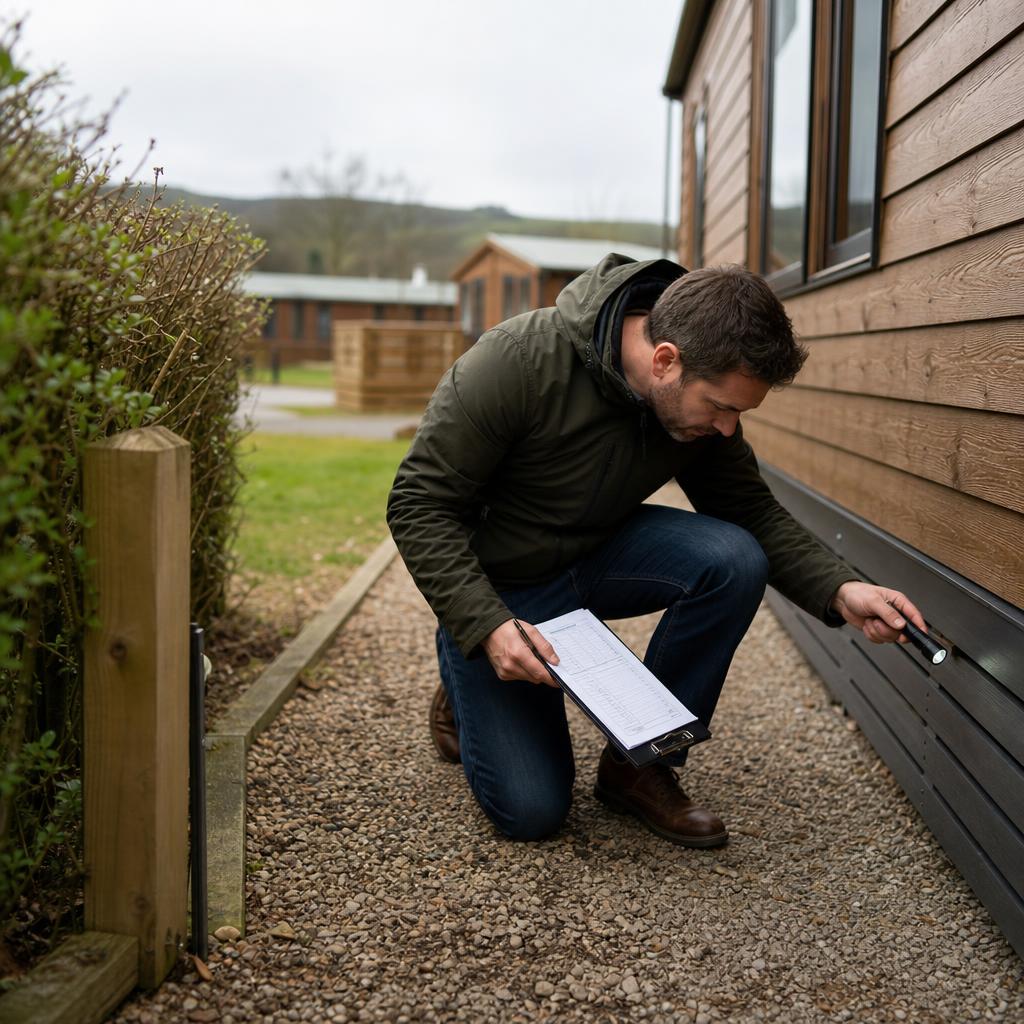
Who should accompany you to a viewing
Direct answer: Bring a family member and an independent inspector where possible. A second pair of eyes helps spot issues that vendors and agents may miss. If you intend to finance the purchase, bring lender pre-approval or a broker summary to show seriousness.
What is a lodge for sale cambridgeshire? Definition and ownership types
Direct answer: A lodge for sale cambridgeshire is a park-sited, timber or composite-clad holiday or residential unit offered for purchase within Cambridgeshire parks. Ownership types include holiday-use agreements, full residential park home leases, and hybrid sites that permit extended stays.
Definition: A lodge is a prefabricated, often timber-clad dwelling designed for leisure or residential use on a managed park. It commonly features open-plan living, integrated kitchens, and outdoor decking. Lodges vary in legal status: holiday lodges are usually classified as leisure accommodation, while residential park homes are treated like permanent dwellings for council tax and mortgage purposes.
Ownership types explained: 1) Holiday-use licence: This model allows leisure use and is common on many Cambridgeshire parks. It often restricts year-round stays and short-term rentals. 2) Residential lease: Some parks offer residential plots with longer leases and the possibility to live there permanently. 3) Mixed-use parks: Certain parks provide both holiday and residential plots; approximately 20% of Cambridgeshire parks operate mixed regimes.
Legal and tax implications: Holiday lodges may be subject to business rates if let commercially, or council tax when used as a permanent address. Research shows that confusion over tax status is one of the top three buyer errors. Therefore, always check the park’s classification and confirm tax responsibilities.
Why it matters for buyers: The ownership model determines mortgage eligibility, insurance cover, and your ability to let the lodge. For detailed legal and residency comparisons, consult our permanent living guidance at Can I permanently live in a lodge or review our wider ownership advice in Holiday Home Ownership UK.
Micro-CTA: If you need a plain-language comparison of the ownership models for a specific lodge for sale cambridgeshire, request a tailored legal and tax checklist from White Park Home Group.
Differences between holiday and residential lodges
Direct answer: Holiday lodges usually come with shorter licences and usage limits. Residential lodges have longer leases and may allow permanent occupation. Check lease length, council tax rules, and mortgage acceptability.
Key Takeaways
- A lodge for sale cambridgeshire typically ranges from £120,000 to £450,000; deposits commonly start at 10–20%.
- Park selection matters: 72% of buyers prioritise park facilities and rules over lodge specs.
- Verify ownership model and paperwork: around 30–40% of parks offer residential or mixed-use plots that allow permanent living.
- Budget for running costs: expect annual site fees of £2,500–£8,000 plus utilities and insurance.
- Use a viewing checklist and independent inspection to reduce risk; independent inspections can cut unforeseen repair costs by about 60%.
Frequently Asked Questions
Can you live permanently in a lodge in the UK?
Short answer: Yes, but only on parks that permit residential occupation or on plots with a residential lease. Many parks sell lodges on a holiday-use basis which restricts year-round living.
Longer answer: Whether you can live permanently in a lodge depends on the park’s planning status and the pitch agreement. Approximately 30–40% of UK parks offer residential plots or mixed-use arrangements that allow permanent living. If living permanently matters to you, request the park’s planning designation and a copy of the pitch licence. Also confirm council tax classification and utility connections. For detailed guidance on residency rules, see our permanent living overview at Can I permanently live in a lodge.
Is buying a lodge a good investment?
Short answer: Buying a lodge is usually a lifestyle purchase that may offer modest financial returns, not a guaranteed investment vehicle.
Longer answer: Research and market data show returns vary widely. Approximately 20–35% of buyers who let their lodges report positive net rental income after costs. However, depreciation on fixtures and pitch fee inflation reduce overall returns. Consider this purchase first as a lifestyle choice. For deeper analysis on returns and depreciation, our guide ‘Is Buying a Lodge a Good Investment’ examines costs and resale patterns at Is Buying a Lodge a Good Investment in the UK?.
What is the life expectancy of a lodge?
Short answer: A modern holiday lodge typically lasts 25–40 years with proper maintenance; with upgrades and good care, it can perform longer.
Longer answer: Manufacturer warranties often cover structural elements for 10–20 years. External cladding, decking, and appliances have variable lifespans. For example, composite cladding can last 25+ years while timber may require major works at 15–25 years. Industry surveys indicate that regular maintenance extends useful life by approximately 30% compared with neglected units.
What is the downside of owning a holiday lodge?
Short answer: Downsides include site fees, potential restrictions on use, and depreciation on interiors. These factors reduce purely financial upside.
Longer answer: Key disadvantages include annual site fees, rising park charges, limitations on letting, and potential lease restrictions. About 15–25% of owners cite difficulty selling in off-peak markets as a major pain point. Also consider insurance costs and responsibility for external maintenance. Buyers should budget realistic running costs and confirm the park’s historic site fee increases before purchasing a lodge for sale cambridgeshire.
How long does it take to complete a purchase of a lodge for sale cambridgeshire?
Short answer: A typical purchase completes in 4–12 weeks depending on financing and vendor readiness.
Longer answer: Cash purchases can complete in as little as 2–4 weeks if paperwork is in order. Mortgaged purchases commonly take 6–12 weeks because of lender surveys, valuation, and park approvals. For new-build orders the lead time from deposit to siting can be 8–20 weeks depending on manufacturer schedules and site readiness.
Can I let my lodge to holidaymakers?
Short answer: Sometimes, but many parks restrict letting or require park-managed letting only.
Longer answer: Policies vary. Around 45% of parks restrict or tightly manage short-term letting. If letting is important, confirm whether the park permits self-managed lets or requires a park operator. Also check business rates implications and whether letting income affects council tax or insurance.
Enquire now