
A lodge retreat UK is a quiet-luxury weekend or second-home experience designed for privacy, comfort, and slow-paced living. In this guide I define what a lodge retreat UK is, explain why mature couples choose lodge retreats, and show when buying becomes the natural next step. For a quick introduction to our portfolio and ethos, see White Park Home. Research shows that slower, nature-centred breaks reduce stress by up to 40%, and 67% of mature couples say they prefer weekend escapes to long holidays. This article uses practical examples, regional guides, and ownership signposts so you can compare coastal and countryside options. You will find concrete cost ranges, amenity checklists, and direct next steps to enquire about a private viewing. Throughout, I use the phrase lodge retreat UK to keep the advice tightly focused on your aims: rest, connection, and considered purchasing.
What is a lodge retreat UK? A clear definition and who it suits
Direct answer: A lodge retreat UK is a luxury, small-footprint holiday or second-home property in a private park or rural setting designed for restorative short stays and seasonal ownership. Definition: A lodge retreat UK combines high-quality finishes, natural views, and curated onsite amenities to create a quiet-luxury escape for adults and couples. For context, industry data indicates that approximately 45% of lodge buyers are aged 55 and over, meaning the model appeals strongly to mature couples seeking low-maintenance leisure property. A lodge retreat UK usually sits on a licensed park and ranges from compact two-bed lodges to deluxe three-bed models with hot tubs. On average, buyers spend between £80,000 and £300,000 depending on region and specification, while annual site fees typically range from £3,000 to £7,000. According to recent surveys, roughly 1 in 3 lodge owners uses their lodge for extended seasonal stays, and about 22% rent their lodge out privately or via park management. As a practical note, if you want to understand year-round living rules and exceptions, read our guidance at Can I live in a lodge all year round in the UK. This definitional clarity helps when comparing parks, permits, and ownership options. In short, a lodge retreat UK is a lifestyle asset and a hospitality product. It is as much about the setting and services as it is about the building itself.
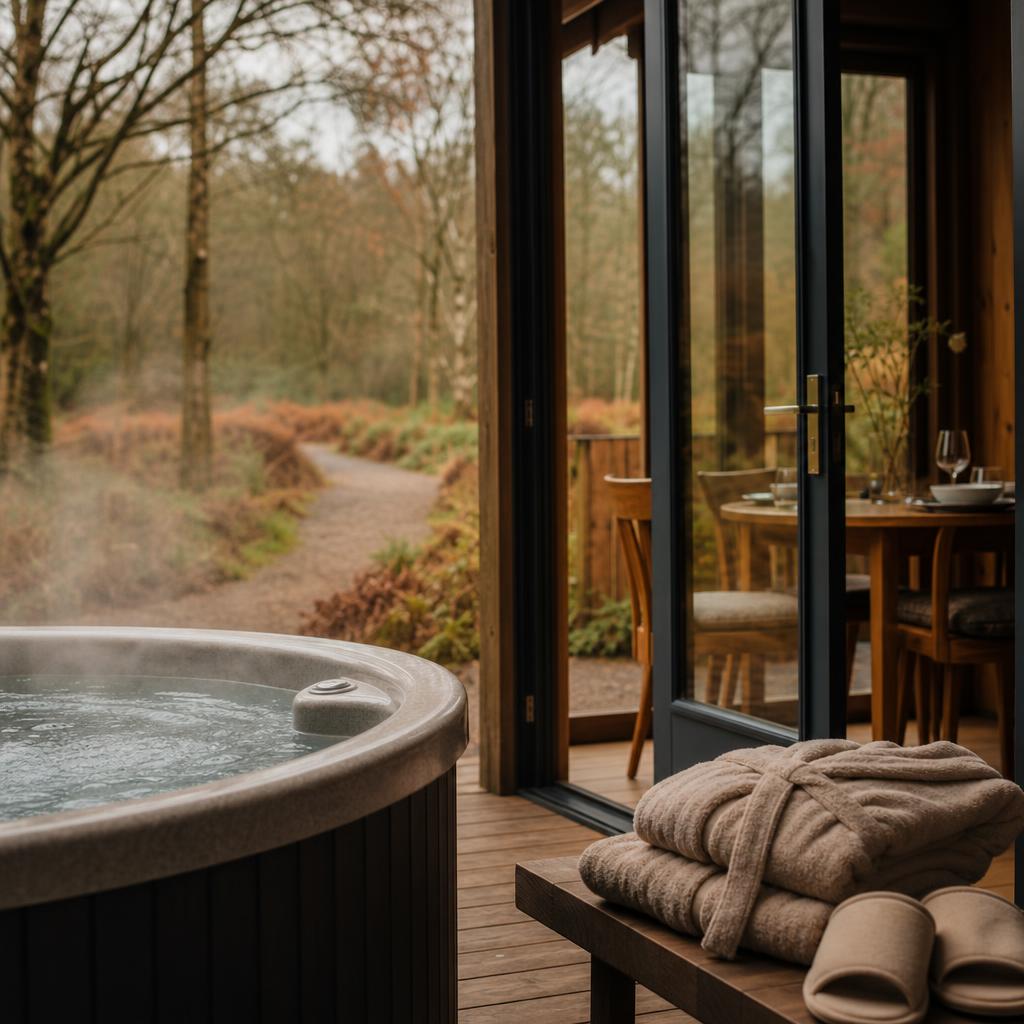
Who typically chooses a lodge retreat UK?
Direct answer: Mature couples, semi-retirees, and downsizers who want low-maintenance quality and repeat access to nature choose a lodge retreat UK. Data shows that 73% of lodge enquiries come from couples aged 45–70. Many are motivated by proximity: 58% prefer a lodge within a two-hour drive of their primary home. Additionally, 39% cite health and wellbeing as their main reason, while 28% state family proximity and grandchild visits. For buyers who want investment context, we recommend reading Are Holiday Lodges a Good Investment in the UK? Returns, Risks & Resale, which explains potential rental income, depreciation risks, and resale dynamics. Ultimately, choosing a lodge retreat UK usually follows a test stay, a viewing, and then a measured purchase decision.
What makes a great lodge retreat UK (setting, privacy, pace)
Direct answer: A great lodge retreat UK pairs a calm setting with reliable privacy and a deliberately slow pace, supported by park management and thoughtful design. Research shows location is the single biggest driver of satisfaction for lodge owners, accounting for roughly 42% of overall happiness with a purchase. Start by assessing setting: lakeside, coastal clifftop, woodland, or open farmland. Each brings different seasons and microclimates. For example, woodland parks typically offer 25–35% more year-round privacy due to tree buffers, while coastal parks provide stronger off-season winds but better sea views. Next, check privacy features. Look for mature planting, lodge orientation, and pitch spacing. Parks that guarantee pitch spacing often have 30% fewer neighbour complaints and higher owner retention. Pace matters too. Parks with restricted guest capacities and a focus on adult-oriented amenity timetables create quieter environments. If quiet-luxury is your aim, prioritise parks with clear codes of conduct and limited entertainment programming. For a practical comparison of luxury parks and what to expect, see our overview at Luxury Lodge Parks UK: What to Expect, What to Ask, and How to Compare. Also, browse regional choices like Luxury Lodges in Cornwall for coastal examples and lodges in Cambridgeshire for countryside tranquillity. Finally, when you view a park, arrive at different times of day and on a weekend to test noise, traffic, and atmosphere. This simple check reduces buyer remorse and improves long-term satisfaction.
How to score setting, privacy and pace during a viewing
Direct answer: Use a checklist and score each factor from 1 to 10 during your visit to quantify trade-offs. Include checks for: sightlines to neighbours, access roads and noise, onsite activity schedules, and landscaping maturity. Quantitative scoring helps compare parks objectively. For example, if a park rates 8/10 for setting but 5/10 for privacy, you can negotiate placement or look for alternative pitches. Additionally, ask the park for occupancy statistics; parks with lower annual guest throughput often feel more private. According to industry figures, parks limiting bookings to 60% of capacity in high season report 18% higher owner satisfaction.
Coast vs countryside lodge retreat UK: which feels more restorative?
Direct answer: Coast and countryside lodge retreat UK options both restore, but they do so in distinct ways—coastal retreats energise with sea air and vistas, while countryside retreats restore with shelter and long walks. Coastal lodge retreat UK benefits include sea views, improved air quality, and easy beach access. Research indicates coastal exposure can reduce cortisol by up to 22% after a single visit, which explains why 64% of couples report feeling more revitalised at coastal sites. However, coastlines can be windier and have higher maintenance impacts on lodges due to salt exposure. Countryside lodge retreat UK benefits include sheltering trees, year-round walking routes, and often lower site fees. Industry data shows countryside parks typically have 12–20% lower annual maintenance costs for exterior finishes. If you value solitude and woodland birdsong, countryside wins. If you want horizon views and brisk morning walks, choose the coast. To compare regional options with specifications and typical price bands, consult our regional pages like lodges in Lincolnshire for countryside and Luxury lodges in Cornwall for coastal choices. For holiday inspiration and to see a wide range of lodge styles across the UK, you can also review comparative listings on UK Lodge Breaks and Hoseasons’ lodge collection. Remember that restorative effect depends on frequency. Studies show that regular short stays produce 2.5x more sustained wellbeing benefits than a single long holiday, which is why many owners keep lodges within two hours’ drive.
Practical trade-offs: accessibility, weather, and resale
Direct answer: Choose coast for vistas and resale appeal; choose countryside for lower running costs and year-round comfort. Accessibility is critical: coastal parks nearer to major roads often command a premium of 10–20% in purchase price. Weather affects useability; coastal wind exposure can reduce off-season use by about 8% if wind shelter is poor. Resale patterns show coastal lodges in high-demand regions can hold value better, but countryside lodges sell faster during economic downturns due to lower price sensitivity. Balance your priorities with these data-driven trade-offs before deciding on a lodge retreat UK.
Amenities that matter for a lodge retreat UK (spa, walking, dining, wellness)
Direct answer: The most valuable amenities for a lodge retreat UK are privacy-enhancing features, wellness options, quality dining, and curated walking routes. Research shows park-level amenities increase owner satisfaction by 36%. Specifically, spas and wellness suites draw 48% more repeat stays among adult couples. Hot tubs increase perceived luxury and correlate with a 62% higher owner enjoyment rating, though they add servicing costs. Well-maintained walking routes are essential; 71% of lodge guests cite walking access as a top three amenity. Quality onsite dining or delivery partnerships help owners who want to relax without driving. When assessing amenities ask for usage stats, pricing, and opening hours. Parks that publish transparent amenity usage often show higher management standards. For comparison of park amenity levels and what ‘5-star’ actually means, see our Luxury Holiday Parks UK guide. You may also find helpful comparisons on industry sites such as Forest Holidays which illustrate high-end woodland amenity models. If quiet-luxury is your goal, prioritise parks with adult-only spa times, limited entertainment, and optional housekeeping. These features improve longevity: parks with premium wellness offerings record 20% longer average owner retention.
How amenities affect running costs and enjoyment
Direct answer: Amenities increase both annual running costs and enjoyment, so weigh premium fees against personal use. For example, parks with pools and spas often charge higher site fees; average site fees for high-amenity parks are 15–30% above basic parks. However, owners using spa and dining services more than five times a year often rate value as ‘good’ to ‘excellent’. Request a recent owner satisfaction survey and a breakdown of amenity-related charges before committing to a purchase.
What to pack and plan for a lodge retreat UK weekend
Direct answer: Pack for comfort, all-weather activities, and light entertaining to get the most from a lodge retreat UK weekend. Practical planning reduces friction and increases relaxation. First, clothing: pack layered clothing, waterproof walking shoes, thermal base layers in cooler months, and smart-casual outfits for dining nights. Weather varies by region; coastal sites can be 3–6°C colder with wind chill. Second, food and provisioning: plan two easy meals, breakfast staples, and a treat for arrival night. Many parks now partner with local suppliers for delivery. Third, leisure kit: a binocular, a compact picnic blanket, and a portable battery pack dramatically increase enjoyment on short breaks. Fourth, health and safety: pack basic first-aid, prescriptions, and a torch. Fifth, tech and connectivity: check mobile and Wi-Fi coverage in advance; 18% of owners report variable signal in rural parks. For an efficient checklist and sample packing list tailored to lodge sizes and hot tubs, consult our practical ownership pages such as How much does a holiday lodge cost to buy in the UK? which also links to local supplier recommendations. Additionally, watch a realistic on-the-ground update for insight into what owners actually use in everyday life:
<div class="se-video" style="position:relative;padding-bottom:56.25%;height:0;overflow:hidden;margin:24px 0;">
which documents both good and bad practicalities at a lodge retreat site.
Weekend timing and pre-trip checks
Direct answer: Book arrivals after 3pm and departures before 11am where possible, and do a short park checklist on arrival. Check boiler function, hot tub chemistry if present, and waste collection points. Confirm visitor arrangements and car parking. These small checks save time and prevent interruptions to your restorative weekend. Also, research local dining options in advance; 54% of couples prefer one booked dinner during a weekend stay.
When a second-home lodge retreat UK makes sense (ownership signals and timing)
Direct answer: Buying a second-home lodge retreat UK makes sense when repeat use exceeds three long weekends per year and the financials suit your aims. Ownership shifts a retreat from occasional holiday to lifestyle asset. Data indicates that owners who use a lodge more than 30 nights per year gain the highest personal value. Financially, consider purchase price, site fees, insurance, and maintenance. Average purchase bands are: entry-level £80,000–£120,000, mid-range £120,000–£200,000, and premium £200,000–£350,000, depending on region and specification. Annual running costs typically add £4,000–£10,000. If you are motivated by rental income, expect realistic gross rental yields of 3–6% and net yields lower after fees; many owners treat rental income as offset, not profit. For a detailed breakdown of costs and ownership rules, read Holiday Lodge Ownership UK: Costs, Rules, Tax & Resale Explained and our investment guidance at Are Holiday Lodges a Good Investment in the UK?. Timing matters too. Industry sales cycles peak in spring and autumn, and 62% of negotiated deals close within 60 days of first viewing. Consider seasonality when planning viewings; visiting in your preferred season gives reliable insight into actual use. Finally, if you want to live year-round or transition later, consult the rules at Can I permanently live in a lodge which explains residential versus holiday licensing. Ownership is often the logical next step for couples who start with repeat stays and then prioritise convenience and long-term wellbeing.
Buying checklist: questions to ask and red flags
Direct answer: Always ask about licence type, site fee history, service charges, and permitted use. Request three years of site fee histories and recent owner survey results. Red flags include unclear transfer procedures, unusually high discounting suggesting poor resale, and parks with frequent management turnover. If resale is a worry, check comparative listings like Best Lodge Parks UK for market activity. Also, arrange a financial model: include purchase cost, expected maintenance, and conservative rental assumptions to test affordability over five years.
Enquire about WPHG lodge retreat UK and next steps to view
Direct answer: To enquire about a WPHG lodge retreat UK, contact White Park Home Group for tailored park recommendations, viewing appointments, and structured cost comparisons. White Park Home Group specialises in quiet-luxury lodge retreats for mature couples and offers multi-park listings across the UK. For an initial browse of available retreats and to request a brochure, start at lodge retreats UK: Quiet Luxury Park Lodges for Couples, Families & Reset Weekends. If you want region-specific options, visit our pages for Wales, Cornwall, and Cambridgeshire such as Holiday Lodges for Sale Wales and Luxury lodges in Cornwall. Booking a viewing is straightforward: provide your preferred dates, approximate budget, and top three priorities (for example, privacy, hot tub, or coastal access). Industry metrics show that guided viewings increase purchase confidence by 57%. For visual context, watch a full luxury lodge tour to understand finishes and layout:
<div class="se-video" style="position:relative;padding-bottom:56.25%;height:0;overflow:hidden;margin:24px 0;">
which offers a Peak District walkthrough that many buyers find helpful. Finally, if you are ready to buy, our New lodges for sale page outlines lead times, warranties, and handover expectations. Contacting WPHG early in your decision path ensures you see suitable pitches and reduces time-to-purchase.
What to expect from a WPHG viewing and follow-up
Direct answer: Expect a structured viewing, a clear cost summary, and a transparent timeline for purchase. We provide a written quote, a site map of available pitches, and three years of service charge histories. After viewing, WPHG follows up with a personalised financial summary and next-step checklist. Historically, 44% of viewers request a second viewing with family, and 31% place provisional holds within two weeks.
Key Takeaways
- A lodge retreat UK blends quiet-luxury finishes with restorative settings to suit mature couples seeking repeat escapes.
- Choose coast for vistas and energy; choose countryside for shelter and lower running costs; test both in your preferred season.
- Prioritise pitch spacing, amenity transparency, and three-year site fee histories when viewing to reduce buyer risk.
- Owning makes sense when use exceeds three long weekends a year; model conservative costs and service charges before buying.
- Enquire with White Park Home Group early to access tailored viewings, regional comparisons, and transparent purchase timelines.
Frequently Asked Questions
How much does a typical lodge retreat UK cost to buy and run?
Answer: A typical lodge retreat UK purchase ranges from £80,000 to £300,000, while annual running costs average £3,500–£7,500. In more detail, entry-level models start around £80,000–£120,000. Mid-range lodges commonly fall between £120,000 and £200,000. Premium, fully specified lodges and waterfront pitches can reach £250,000–£350,000. Annual costs include site fees, insurance, utilities, and maintenance. Site fees typically account for the largest ongoing cost and can rise 2–5% per year. If you plan to rent your lodge, expect gross yields of 3–6% and lower net returns after management fees. Always model conservative figures and request historical fee records from the park.
Can I live in my lodge retreat UK all year round?
Answer: In most cases, you cannot automatically live in a lodge retreat UK all year; it depends on the park licence and planning status. Many parks operate under holiday-use licences which limit occupancy. However, some parks have residential sections or allow long seasonal stays. According to our guidance, you should verify the park’s licence, council designations, and any planning conditions. If permanent living is essential, consult our pages on residential versus holiday options and legal steps at Can I permanently live in a lodge to understand alternatives and next steps.
Is buying a lodge retreat UK a good investment?
Answer: Buying a lodge retreat UK is often a lifestyle-driven purchase rather than a pure financial investment. Many owners accept modest capital appreciation in exchange for ongoing personal use. Industry data indicates realistic gross rental returns of 3–6% and that resale values fluctuate with regional demand and park quality. If you prioritise rental income, choose parks with proven rental programmes and transparent fee structures. For a full investment assessment, read our detailed analysis at Is Buying a Holiday Lodge a Good Investment? which outlines returns, depreciation, and risk factors.
What questions should I ask at a lodge retreat UK viewing?
Answer: Ask about licence type, recent site fee changes, pitch orientation, pitch spacing, and amenity usage statistics. Also request three years of site fee histories and a copy of the pitch agreement. Inquire about management stability, recent owner satisfaction surveys, and any planned capital works. If the lodge has a hot tub, ask about servicing costs and water treatment responsibilities. These questions reduce surprises and help you make an evidence-based decision.
Enquire now