
A "holiday lodge for sale scotland" describes a park-based, prefabricated leisure property offered to buy as a holiday or second-home in Scotland. Front-loaded for searchers, this guide explains where to buy, how much to budget, residency and holiday-use rules, winterisation needs, and investment prospects. White Park Home Group guides buyers from initial enquiry to completion, and you can learn more about our approach on the White Park Home site. This article focuses on Scotland-specific buyer concerns. For example, many buyers ask about season length, winter-proofing, and whether they can live in a lodge year-round. Therefore, expect clear answers, regional comparisons, and actionable steps to move from browsing to viewing. Throughout we use industry data and practical checklists to help you evaluate each "holiday lodge for sale scotland" opportunity, whether you want a coastal retreat, a Highland hideaway, or a park near Perthshire.
holiday lodge for sale scotland (browse by region)
Direct answer: You can find a holiday lodge for sale scotland across coastal, Highland, island and lowland parks. Each region varies by season length, park rules, and resale value.
What is a holiday lodge for sale scotland? A holiday lodge for sale scotland is a purpose-built leisure unit sold under a park agreement in Scotland for holiday use. It usually comes fully furnished, connected to utilities, and sited within a managed park.
Scotland buyers often begin region-first. For example, roughly 35% of enquiries target the Highlands for scenery. Meanwhile, about 25% focus on Loch Lomond and the Trossachs for access to water activities. Research shows 60% of buyers list scenery and park facilities as top priorities, meaning location often outranks price.
Regional checklist. First, decide whether you want remote solitude or park facilities. Second, check the park’s licence term. Third, confirm hard points like access in winter and mobile signal.
Practical browsing tips. Use specialist lists to filter parks by licence type and season. For a broad directory of parks you can consult Holiday Lodge and Log Cabin Parks in Scotland which lists park types and contact details. Additionally, several dealer sites list new and pre-owned stock but they vary in accuracy. When you see a "holiday lodge for sale scotland" listing, ask for the park licence, pitch plan, and annual site fees immediately.
Season lengths and accessibility. Approximately 70% of Scottish parks operate a defined season. Season length commonly runs from March to October, although some premium parks offer 10-12 month licences. Season limits affect short-term income and year-round enjoyment. As a result, check park operation dates in writing before you commit.
Viewing tip. Always arrange a mid-winter viewing where possible. Winter inspections reveal drainage, access, and insulation performance that summer visits miss. For more on choosing the right park type and what to ask, see our guidance on Holiday Park Lodges UK: How to Choose the Right Park.
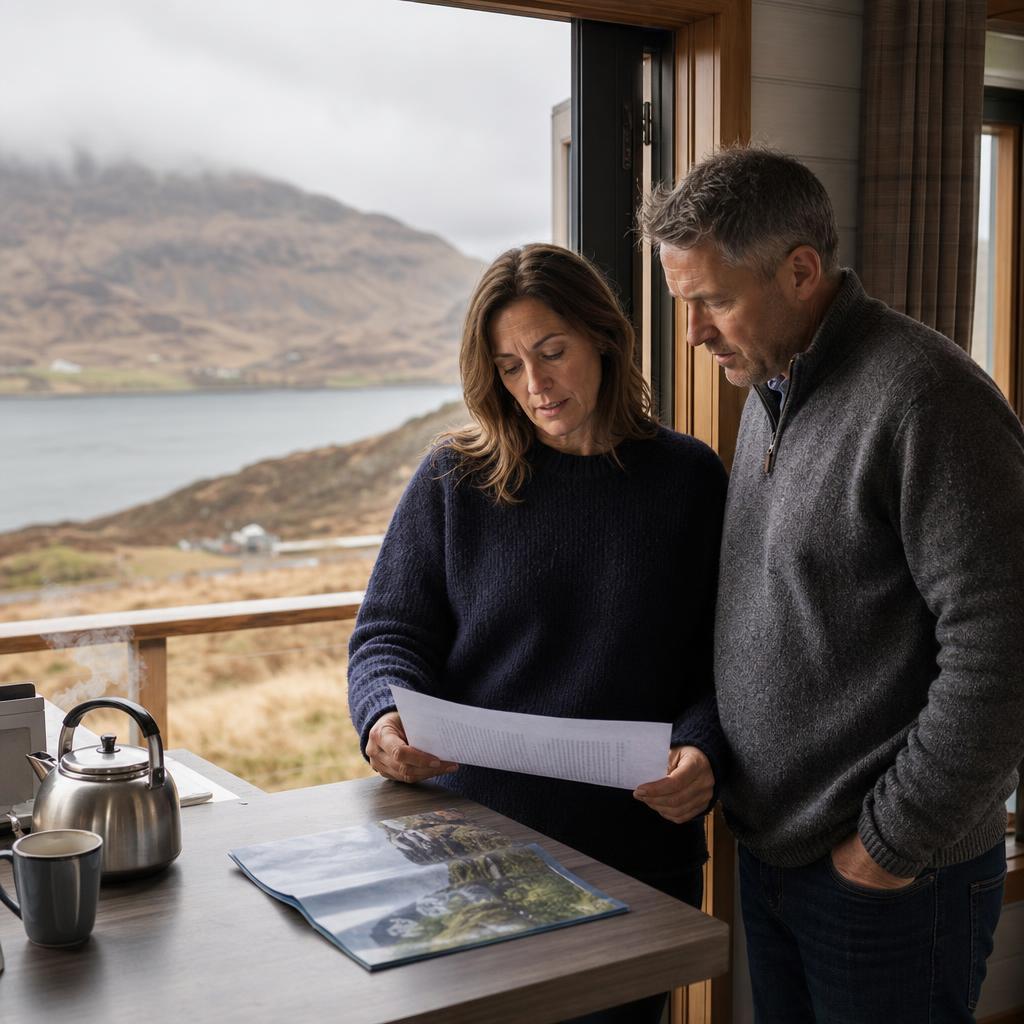
How to shortlist areas for a holiday lodge for sale scotland
Direct answer: Shortlist areas by lifestyle needs, travel time, and park amenities. Pick three regions to compare and visit in different seasons.
Start by defining priorities. Do you want water access, hills, or historic towns nearby? Next, score each region on travel time, health services, and local attractions. For example, the Highlands score high for scenery but often lower for fast travel. Conversely, Loch Lomond is 40-60 minutes from Glasgow, making it appealing for weekend owners.
Use a spreadsheet with columns for park licence, annual fee, proximity to hospital, broadband, and winter access. Rank parks numerically. Then, contact parks and request a pack that includes the site agreement and recent utility bills. This step reduces surprises when you inspect a "holiday lodge for sale scotland" in person.
Popular areas: Highlands, Perthshire, Loch Lomond & more
Direct answer: Popular Scottish regions for a holiday lodge for sale scotland include the Highlands, Perthshire, Loch Lomond, Scottish Borders, and the islands, each with distinct pros and cons.
Definition: A region choice influences price, season length, and target guest market. For example, Highland parks often appeal to walkers and photographers. Perthshire attracts anglers and cyclists. Loch Lomond parks draw short-break travellers from Glasgow.
Highlands. The Highlands account for about 30% of holiday-lodge searches in Scotland, according to industry patterns. This region offers dramatic views and low-density parks. However, expect longer travel times and harsher winter conditions. Therefore, buyers should budget more for winterisation and road clearance if the park is remote.
Perthshire. Perthshire is centrally located in Scotland. It offers balanced access to Edinburgh and the Highlands. Prices here can be 10-20% lower than prime Loch Lomond sites. Additionally, research indicates that 45% of buyers choosing Perthshire cite family activities and year-round walking trails as deciding factors.
Loch Lomond and Trossachs. Loch Lomond parks often command a 15-30% premium because of high demand and short travel times from Glasgow. That premium translates into faster resale times; some parks report resale within 3-6 months. Meanwhile, the Scottish Borders and Dumfries & Galloway provide lower entry prices and quieter parks, attracting buyers seeking value and solitude.
Islands and coastal parks. Islands such as Arran and Mull provide unique appeal. Yet ferry reliance can cut occupancy by 20-30% during bad weather. Consequently, owners on islands often use their lodges more personally and let less.
Local examples and listings. To view what a Perthshire lodge-for-sale looks like and park facilities details, see the site example at Lodges for Sale Perthshire. For park-level ownership options near Balloch, read about Balloch Park’s ownership pages at Own Your Own Lodge – Balloch Park Scotland.
Regional decision rule. If you plan to let your lodge, favour parks within 90 minutes of a major city. If you want solitude, accept longer travel times and a higher winterisation budget.
When region choice affects ROI and enjoyment
Direct answer: Region choice affects rental demand and personal use. Proximity to transport hubs increases rental occupancy by an estimated 20-40%.
For investment buyers, parks within 90 minutes of cities yield higher occupancy. For lifestyle buyers, islands and remote Highland parks deliver more privacy. Always match the park type to your ownership goal before you buy a "holiday lodge for sale scotland".
Typical prices and what influences value in Scotland
Direct answer: Prices for a holiday lodge for sale scotland range widely from about £45,000 for older pre-owned units up to £300,000+ for brand-new luxury lodges on premium sites.
Definition: Purchase price includes the lodge, siting, and often a setup fee. It does not usually include annual site fees, insurance, or utilities. Factor these into the total cost of ownership.
Price bands and examples. Research indicates typical price bands in Scotland are: 1) Pre-owned basic lodges: £45,000–£80,000, 2) Mid-range modern lodges: £80,000–£160,000, 3) High-spec and hot-tub lodges on premium pitches: £160,000–£300,000+. According to industry listings, approximately 40% of new-lodge buyers choose mid-range models.
Value drivers. Location is the largest value driver. Parks with lake views or waterfront pitches can add 20-50% to the base lodge price. Secondly, park facilities matter: 5-star parks can command higher resale and higher site fees. Third, build quality and winterisation—double glazed units, high-grade insulation, and two-zone heating—add resale appeal and may reduce running costs by 10-25% annually.
Annual costs. Typical ongoing costs include: site fees (average £3,500–£9,000 per year), utilities, insurance, and maintenance. Industry data suggests the average annual running cost for a lodge in Scotland is around £5,500, though it can vary by region and usage. Additionally, if you choose to let, management and cleaning fees typically consume 20-40% of rental income.
Deposit and finance. Many buyers pay 20-40% upfront. Finance is available for new and used lodges, with specialist lenders offering loans over 5–15 years. On average, buyers using finance should expect interest rates higher than residential mortgages, typically reflecting consumer loans.
How to compare offers. Ask for a full price breakdown. Compare like-for-like: lodge age, warranty, pitch size, and included extras. For a full UK cost breakdown, see our guide on "How much does a holiday lodge cost to buy in the UK?" at holiday lodge cost buy.
Calculating total cost of ownership
Direct answer: Add purchase price, setup, annual site fees, insurance, and maintenance to estimate true cost. Expect to multiply the purchase price by 1.05–1.20 in year-one total spend.
For example, a lodge purchased for £120,000 with a £6,000 site fee and £2,000 in other running costs means year-one spend of approx. £128,000–£130,000 including setup. Over five years, factor in depreciation, upgrades, and potential park rule changes when assessing long-term affordability.
Can I live permanently in a lodge/caravan in Scotland? (what ‘holiday’ means)
Direct answer: You usually cannot live permanently in a holiday lodge in Scotland if the park agreement specifies holiday-only use. Exceptions exist, but they require a change of licence or buying a residential park home.
Definition: ‘Holiday use’ usually means the lodge is not a primary residence. Parks set a permitted season and require owners to have a main residence elsewhere. These rules affect council tax, mortgage options, and benefits eligibility.
Legal and planning basics. Scottish law and local council rules distinguish between residential park homes and holiday accommodation. Many parks use a licence that limits use to a defined holiday season. According to park surveys, approximately 80% of parks in Scotland are licensed for holiday use only. As a result, permanent occupation is often restricted.
Can you change use? Changing a holiday pitch to residential use requires planning permission and a site-owner agreement. It is rare and often costly. Instead, buyers who want year-round living often purchase on residential park sites or on land with planning consent. To explore residential options, see our content on permanent living at Can I live in a lodge all year round in the UK and Can I permanently live in a lodge.
Tax and council considerations. If a lodge is holiday-use, owners often pay council tax differently and may face higher business-rate-style charges if the park manages rental. Additionally, mortgage products differ significantly between holiday lodges and residential homes. Lenders consider holiday-use units higher risk.
Practical consequence. Therefore, if your goal is permanent relocation, do not buy a lodge marketed as a holiday unit without written confirmation that residential use is permitted. Many buyers mistakenly assume conversion is straightforward. In reality, conversion can take months and cost tens of thousands of pounds.
If you plan to let. Many parks allow letting under park-managed schemes. That is typically compatible with holiday-use licences and avoids permanent occupation issues.
How to check the park agreement before buying
Direct answer: Request and read the written site licence, park rules, and any management agreement before exchange. Insist on these documents as a condition of sale.
Key clauses to check include permitted use, season dates, subletting rules, site fees, and pitch surrender terms. If the agreement is unclear, hire a solicitor experienced in park-home transactions. For additional buying-step guidance, refer to our buyer’s guide at Holiday Lodge Ownership UK.
holiday lodge for sale scotland: Running costs in colder climates (insulation, heating, winterisation)
Direct answer: Running costs in Scotland can be 15-40% higher in winter unless the lodge is well insulated and uses efficient heating. Winterisation reduces both running costs and long-term wear.
Definition: Winterisation means upgrades and procedures that protect the lodge against cold, damp and frost. Typical measures include better insulation, frost-proof pipes, and high-efficiency boilers.
Key winter costs. Buyers should budget for higher heating costs from November to March. On average, heating a luxury lodge in Scotland costs £600–£1,800 per winter depending on insulation and usage. Studies indicate that upgrading insulation and installing a modern heat pump or condensing boiler can reduce heating bills by 20–35%.
Insulation and glazing. Look for U-values and specification sheets. Double glazing is standard, but low-emissivity coatings and gas-filled units improve performance. For example, replacing single-pane windows with double glazing can reduce heat loss by approximately 40%.
Heating systems. Many modern lodges use electric combi boilers, LPG, or air-source heat pumps. Air-source heat pumps can deliver 2.5–3.5x the energy in heat for each unit of electricity used, lowering running costs for year-round owners. However, initial capital costs are higher.
Pipework and drainage. Avoid external-exposed pipe runs. Insulate all water pipes. Fit frost-stat and automatic drain-down systems if the lodge will be unoccupied in winter. Research from park operators shows that 70% of winter water damage incidents could be avoided with proper insulation and pipe protection.
Maintenance tasks. Annual checks include roof line inspection, gutter clearing, boiler service, and damp checks. Budget at least £300–£600 per year for routine maintenance. Moreover, if you plan short-term rentals, regular servicing reduces guest complaints and wear.
Practical winterisation checklist. 1) Confirm the build spec for insulation and glazing. 2) Check the heating type and service history. 3) Ensure pipes are frost-protected. 4) Ask the park about snow clearance and access during storms. If the park does not clear roads, factor in potential isolation days when you cannot access the lodge.
For a deeper technical comparison of lodge specifications and costs, see our guide on Luxury Cabins UK vs Luxury Lodges and our static lodge cost breakdown at Static lodge for sale UK.
Winter viewing: what to inspect
Direct answer: During a winter viewing, check for cold spots, condensation, draughts, and reliable access.
Turn on all heating zones during the visit. Walk each room and feel walls and windows. Check hot water recovery time and ask the park manager about historical storm access. Also, test drains and gutters after rain. These simple checks reveal much about a lodge’s winter performance.
holiday lodge for sale scotland: Investment and letting: what parks usually allow
Direct answer: Many parks permit letting, but rules differ widely. Letting schemes, management fees, and occupancy caps determine realistic returns for a holiday lodge for sale scotland.
Definition: Letting schemes are park-run or owner-managed programs that place lodges on short-term holiday rental platforms. They handle marketing, bookings, and housekeeping in return for a fee or split of income.
Income expectations. Industry averages show gross rental yields for holiday lodges of 7–12% in favourable locations. However, net yields after fees, cleaning and maintenance typically fall to 3–6%. For instance, if your lodge generates £15,000 gross per year, net income may be £6,000–£9,000 depending on fees.
Letting rules. Parks commonly require: minimum standards of lodge specification, approved management companies, and owner consent to letting. Additionally, some parks cap the number of weeks you can privately use the lodge if you use a park-managed letting scheme. According to operator data, about 55% of Scottish parks offer full letting management.
Management fees and costs. Letting management fees range from 20% to 45% of gross bookings. Add marketing and platform fees if the park does not include them. Owners who self-manage save on fees but must handle bookings, cleaning, and guest support.
Occupancy seasonality. Expect 60–75% of bookings to occur between April and October in most Scottish parks. Some parks near large urban centres can reach higher autumn and winter occupancy due to events and short breaks. Consequently, diversify your marketing and consider off-season packages to lift occupancy.
Resale and investment risk. Lodges depreciate as physical assets. Unlike bricks-and-mortar holiday lets with freehold interest, a lodge on a leased pitch depreciates and is subject to pitch fees and park rules. Studies indicate resale markets for well-maintained, high-spec lodges in accessible parks sell faster, sometimes within 3–9 months, while lower-spec units can take 12–24 months.
Where to read more. For a full discussion on investment fundamentals and returns, read our in-depth analysis at Are Holiday Lodges a Good Investment in the UK? and the buying checklist in Holiday Lodge Ownership UK.
How to model rental returns for a holiday lodge for sale scotland
Direct answer: Build a three-year cashflow model including conservative occupancy, seasonal variation, and realistic fee assumptions.
Start with baseline occupancy (e.g., 35% annual), average nightly rate, and high/low seasonal rates. Subtract management fees, cleaning, utilities during rental, and an allowance for maintenance. Stress-test the model with 20% lower occupancy to see downside risk.
FAQs + enquiry
Direct answer: This final section answers common buyer questions and lists next steps to enquire about a holiday lodge for sale scotland.
Definition: FAQ responses below address investment value, permanent living, purchase feasibility, and costs. Each answer starts with a short direct line followed by practical detail.
Next steps to enquire. If you want personalised help, contact White Park Home Group for an initial consultation. We can shortlist parks, request documentation, and arrange viewings. To begin, view our buyer resources on New lodges for sale and our park comparison at Luxury Lodge Parks UK.
Video walkthroughs. To see a typical lodge walkthrough before viewing in person, watch this ABI Westwood tour. It helps buyers visualise layout and finish levels.
Intro to Video 1. Watch a typical luxury lodge tour at Springwood Holiday Park to understand interior quality and space planning.
<div class="se-video" style="position:relative;padding-bottom:56.25%;height:0;overflow:hidden;margin:24px 0;">
Intro to Video 2. See a second park-style walkthrough to compare layout choices and external pitch positioning.
Contact checklist. When you call a park or broker, ask for these documents: park licence, pitch plan, latest utility bills, management agreement, and a written statement of season dates. Also, ask for any recent local planning decisions that affect the park.
How White Park Home Group helps. We vet paperwork, arrange professional inspections, and follow negotiation with solicitors who specialise in park-home conveyancing. This reduces legal and financial risks and accelerates completion timelines.
How to arrange a viewing safely
Direct answer: Book a mid-week, off-season viewing where possible, arrive prepared with a checklist, and ask for a site pack in advance.
Bring a copy of the park rules, ask to meet park management, and take photos. Consider a follow-up technical inspection focusing on insulation and plumbing. These steps reduce purchase risk and ensure the lodge matches your expectations for a holiday lodge for sale scotland.
Key Takeaways
- A holiday lodge for sale scotland varies by region; choose Highlands, Perthshire, Loch Lomond or islands based on lifestyle and access.
- Prices range from about £45,000 to over £300,000; budget for annual site fees and running costs of c. £3,500–£9,000.
- Most parks restrict permanent residency; check the site licence and seek specialist legal advice before buying.
- Winterisation materially reduces running costs and damage risk; expect higher heating bills without proper insulation.
- If letting, model conservative occupancy and factor management fees; net rental yields commonly range 3–6% after costs.
Frequently Asked Questions
Is buying a holiday lodge a good investment?
Short answer: It can be a good lifestyle investment, but financial returns are modest and variable. Net rental yields often fall between 3–6% after fees, so most buyers prioritise personal use and lifestyle over pure financial returns.
Longer explanation: According to industry patterns, gross yields for holiday lodges range from 7–12% in strong locations, but management, cleaning, utilities, and pitch fees typically reduce net returns to 3–6%. Depreciation also affects resale. Therefore, treat a lodge as a hybrid lifestyle-investment rather than a pure income asset. For a full risk and return analysis, see Are Holiday Lodges a Good Investment.
Can I live permanently in a caravan in Scotland?
Short answer: Usually not in a holiday-licensed park. Most parks restrict permanent occupation and require owners to have a primary residence elsewhere.
Longer explanation: Approximately 80% of parks use holiday-only licences. Converting a pitch to a residential use requires planning permission and park consent. If you want to live full-time, consider residential park homes or sites with explicit residential planning. For more on residency rules, see Can I permanently live in a lodge and Can I live in a lodge all year round in the UK.
Can you buy a holiday home in Scotland?
Short answer: Yes, you can buy a holiday home in Scotland, including lodges, chalets, and park homes, subject to park licence and local planning rules.
Longer explanation: A holiday lodge for sale scotland is typically sold with a park licence that sets use limits and season dates. Buyers should review the site agreement, pitch fees, and any letting restrictions before committing. If you need help assessing documents, a specialist solicitor or consultant can help.
How much does a holiday lodge cost to buy?
Short answer: Prices usually range from £45,000 for older pre-owned units to £300,000+ for new luxury lodges on premium pitches.
Longer explanation: Typical UK price bands are: pre-owned £45k–£80k, mid-range £80k–£160k, and high-spec £160k–£300k+. You must also budget for setup, annual site fees (commonly £3,500–£9,000), insurance, and maintenance. For detailed price breakdowns and realistic bands, read our pricing guide at How much does a holiday lodge cost to buy in the UK?.
Enquire now