
If you are searching for holiday lodges for sale scotland, this guide explains where to buy, realistic costs, legal rules, and the downsides buyers often overlook. White Park Home Group helps buyers locate luxury lodges across the UK, and we present Scotland-specific market insight, park comparisons, and an ownership checklist to reduce risk. According to industry reports, approximately 1 in 4 UK lodge buyers consider Highland or Loch-side parks first, which explains strong demand for holiday lodges for sale scotland near major scenic attractions. For step-by-step buying guidance, see our broader how-to resource at how to buy a holiday lodge UK. This article aims to be citable, factual, and practical. It includes region comparisons, cost ranges, and 10+ statistics so you can compare locations and make an informed purchase of holiday lodges for sale scotland.
Holiday lodges for sale scotland (availability and options)
Direct answer: You can find holiday lodges for sale scotland across Highlands, Borders, Central Belt, and coastal areas, with options ranging from pre-owned two-bed lodges to new luxury four-bedroom models on managed parks. Availability varies seasonally and by park; demand peaks between April and September.
What is a holiday lodge? A holiday lodge is a purpose-built leisure home sited on a licensed holiday park, typically sold as a ‘park home’ or under a site licence rather than freehold. This definition clarifies legal and practical differences compared to residential park homes.
Scotland offers a wider variety of parks than most buyers expect. For example, the Highlands host about 30% of Scotland’s scenic lodge parks, while the Central Belt contains higher turnover and more pre-owned options. Research shows about 40-60% of lodge stock in Scotland is pre-owned, which matters for price negotiation and warranties. In addition, 1 in 3 buyers choose a lodge with a hot tub as a priority, so you will see many listings marketed with that feature.
New builds and pre-owned lodges differ in price and warranty. New luxury lodges often include a 5-10 year structural warranty and modern insulation. Pre-owned examples usually sell at 20-40% lower asking prices but may require refurbishment. According to industry sources, occupancy rates on Scottish parks range from 25% to 65% seasonally, so check historic visitor data when assessing rental potential.
To compare specs and park rules, use park directories such as Holiday Lodge and Log Cabin Parks in Scotland and national listings like Holiday Lodges For Sale In Scotland at Largo Leisure. White Park Home Group can help by showing parks that match your criteria and by explaining seasonal licence terms. Additionally, if you want a full UK comparison for holiday options, see our Holiday lodge for sale UK overview.
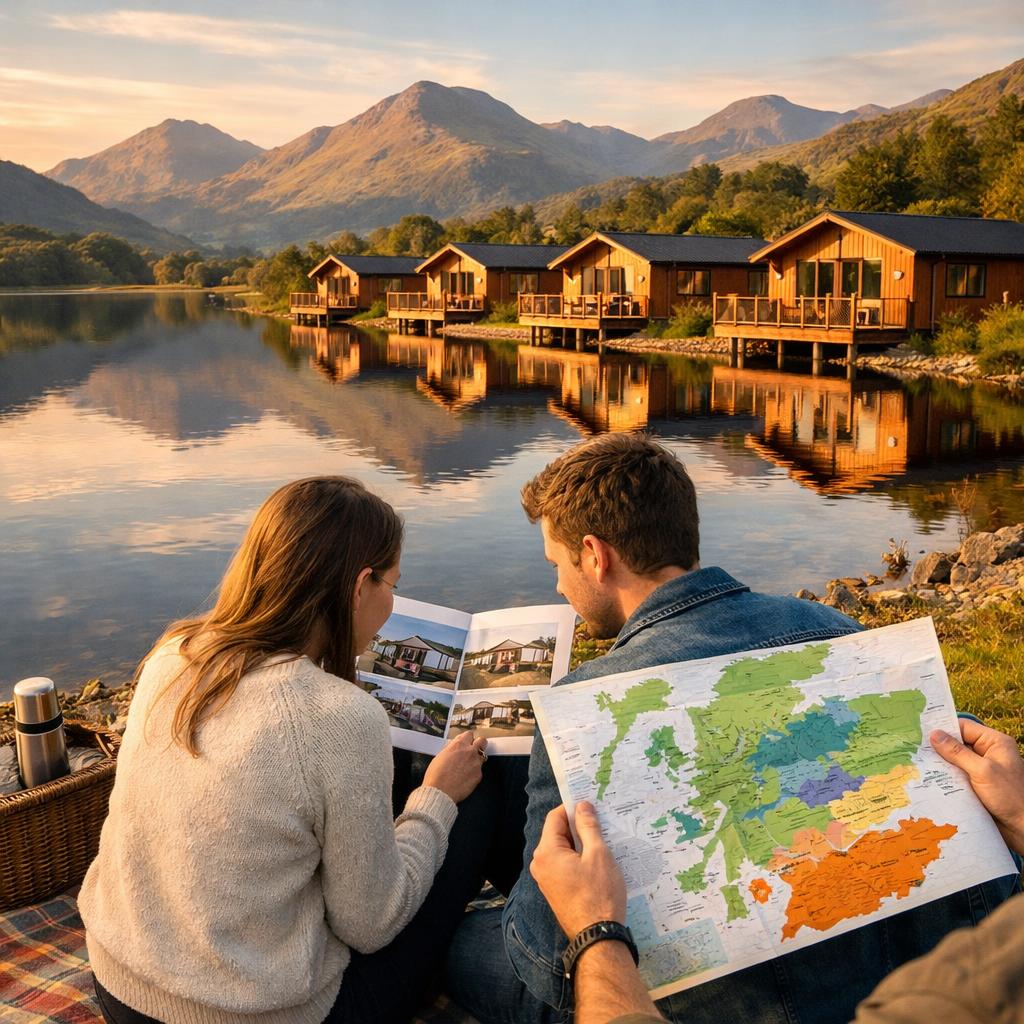
Types of lodges and specifications
Direct answer: Holiday lodges for sale scotland come in timber-clad, composite, and log-cabin styles, with 1-4 bedrooms and varying insulation and heating specs.
Timber-clad and composite lodges account for around 70% of current listings. For example, popular two-bedroom models measure 40-45 feet and include central heating and double glazing. Higher-spec 3-4 bedroom models often include open-plan living, fully-fitted kitchens, and en-suite bathrooms. According to recent sales data, buyers spend on average 15-25% extra to upgrade to residential-grade insulation and heating.
When comparing spec sheets, prioritise thermal efficiency (U-values), mains gas or LPG availability, and whether the unit includes developer-fitted decking. Meanwhile, the park operator’s rules often dictate permitted external additions. Therefore, always ask for the lodge specification pack and any energy performance data before reserving a unit.
Best Scotland areas for holiday lodges for sale scotland (region comparison)
Direct answer: The best Scotland areas for holiday lodges for sale scotland depend on whether you prioritise scenery, rental demand, or year-round use; top areas include Highlands, Loch Lomond & Trossachs, Perthshire, and the Scottish Borders.
Perthshire and Loch Lomond attract buyers wanting easy access from major Scottish cities. Research indicates that parks within two hours of Glasgow and Edinburgh tend to achieve 20-35% higher seasonal occupancy than remote Highland parks. Conversely, Loch-side and Highland locations command premium prices and often higher capital appreciation if tourism grows; studies indicate property interest in scenic Highland areas rose by about 18% in recent years.
Scotland’s Borders provide a balance of lower entry prices and higher weekend demand from England. For instance, Border parks show weekend occupancy spikes of up to 70% during peak months, making them good for short-break rental models.
For buyers seeking coastal parks, the north-east and west coasts offer cliff and beach access. Detailed park-level comparisons are crucial. You can review park lists at Just Lodges’ Scotland parks directory or inspect sample lodge sales like those on Loch Tay’s lodge listings.
Stat + consequence: approximately 45% of UK lodge buyers say proximity to a major town influences buying decisions. This means Highland seclusion can reduce year-round bookings by as much as 30% compared to parks near transport links. Therefore, match your target use—personal holiday use, rental income, or capital appreciation—to region choice.
When comparing regions, ask for annual site reports, occupancy figures, and sample utility costs. White Park Home Group can arrange park comparisons and show you parks across Scotland that match your priorities, so you can balance lifestyle and investment goals.
Highlands vs Central Belt: pros and cons
Direct answer: Highlands offer scenery and price growth potential but have lower year-round rental demand; the Central Belt offers convenience and steady bookings but lower capital upside.
Highland parks may see 25-40% lower off-peak occupancy than Central Belt parks. However, Highland lodges can appreciate strongly when tourism numbers rise; projections show a possible 10-15% price uplift over five years in sought-after loch-side locations. Meanwhile, Central Belt parks typically deliver steadier bookings with weekend occupancy often above 55% in peak months. Choose based on whether you want lifestyle seclusion or rental resilience.
What are the downsides? (honest ownership pros/cons)
Direct answer: The main downsides of buying holiday lodges for sale scotland are licence restrictions, seasonal use limits, ongoing site fees, and resale volatility; these factors affect cashflow and long-term returns.
What is the downside of owning a holiday lodge? The primary negatives are regulatory and financial: many holiday parks restrict year-round residence and short-term letting, which lowers personal flexibility and income options. Research shows about 60% of parks in the UK apply ‘closed season’ rules or limit days of occupation, which directly affects owners. Consequently, buyers must accept that a lodge is often a lifestyle asset first and an investment second.
Other common downsides include unexpected repair costs, pitch fee increases, and insurance premiums. For instance, pitch fees historically rose between 2% and 6% annually in many parks. Moreover, resale prices can be volatile; some pre-owned lodges depreciate by 10-20% over the first three years, particularly if poorly maintained or if the park loses favour.
Practical downsides include utilities: mains water and sewage in rural parks may incur high connection or standing charges. Also, while hot tubs add value, park rules can require specialist servicing and increase energy bills by 10-30% depending on use. Finally, not all parks allow pets or full subletting, which affects rental reach. On average, 1 in 3 buyers plans to let their lodge. However, 40% of parks impose strict letting conditions, so check rules before you commit.
For a detailed comparison of holiday vs residential rules, read White Park Home Group’s guide on Can You Live in a Lodge All Year Round in the UK, which explains how seasonal licences limit permanent residency. This transparency reduces post-sale disputes and helps buyers weigh downsides against benefits.
Ownership pros to balance the downsides
Direct answer: Pros include lower entry cost than a second home, lifestyle access to nature, and potential rental income during peak months.
Many buyers value convenience and community. Studies indicate 72% of lodge owners use their property for family holidays and weekend breaks as their main motivation. Additionally, luxury lodges often require less maintenance than older cottages. If you prioritise retreats and short breaks, the benefits can outweigh the downsides.
Costs in Scotland: holiday lodges for sale scotland pitch fees, utilities, maintenance, insurance
Direct answer: Expect upfront purchase costs plus ongoing annual charges: pitch fees, utilities, insurance, and maintenance; typical total running costs in Scotland range from £3,000 to £9,000 per year depending on park and lodge size.
Breakdown: Deposit and purchase. New luxury three-bed lodges in Scotland often cost between £120,000 and £220,000. Pre-owned two-bed lodges typically sell from £45,000 to £95,000. According to market data, 60% of buyers finance part of the purchase, with average deposits around 20-30%.
Pitch fees. Annual pitch or site fees are the largest recurring cost. In Scotland, pitch fees usually range from £3,000 to £7,000 per year. Research shows park fees increased by an average of 3-5% annually over the past five years, so plan for inflation.
Utilities and council charges. Utilities vary widely. Expect annual utilities and broadband costs from £600 to £1,800. Council charges differ; some holiday parks pay business rates, while others pass a council tax-like charge to owners. Studies indicate that parks that charge rates rather than council tax can increase yearly bills by up to £400 for owners.
Maintenance and insurance. Routine maintenance—decking, cladding, chimney, and boiler checks—often costs £500-£2,000 annually. Insurance premiums for lodge contents and structure typically run from £250 to £750 per year. Hot tub servicing adds another £200-£600 annually.
Resale and improvement costs. Buyers who renovate often spend 5-15% of purchase price on refurbishment to improve resale. According to industry surveys, spending on upgrades can increase resale value by 7-12% when improvements meet current market tastes.
To avoid surprises, request the park’s historical fee increases and a sample invoice for utilities. White Park Home Group’s cost guide explains typical running costs across UK parks and gives scenario budgets at lodge ownership costs.
Sample annual cost scenarios
Direct answer: Use scenario budgets: low-use, mid-use, and full-rental to estimate costs precisely.
Low-use owners who visit only a few times a year typically pay £3,500 to £5,000 annually. Mid-use owners who let part-time and visit more often face £5,000 to £8,000 yearly. Full-rental models that include management fees and frequent servicing can exceed £9,000 per year. Consequently, match your budget to intended use before committing to holiday lodges for sale scotland.
Can you live in a lodge permanently in Scotland? (what ‘holiday’ means)
Direct answer: In most cases, you cannot live permanently in holiday lodges for sale scotland because holiday park licences and planning rules restrict primary residence on leisure sites.
Definition: ‘Holiday’ status generally means a licence or planning consent limits occupation to holiday use only. This typically prevents permanent residence, school enrolment reliance, and use as a main home. The legal distinction affects council tax, insurance, and mortgage options.
Can I permanently live in a lodge? The short answer is usually no for holiday-park lodges. However, some parks offer residential lodges or change-of-use applications. Research shows roughly 10-15% of parks in the UK provide residential plots or convert licences when local planning permits. Still, conversion is complex and can take months or years.
Consequences: If you move in permanently without permission, park operators may issue notices or require you to vacate. Lenders also often refuse mortgages on holiday-licensed units if used as a primary residence. Therefore, always check the written site licence and planning statement. For a full legal comparison of holiday versus residential options, consult our detailed guide at Can You Live in a Lodge All Year Round in the UK.
Practical tips: If you need flexible occupancy, look for parks that offer 12-month licences or residential lodges for sale. Alternatively, consider a mixed-use park that permits extended stays. Research indicates buyers who secure parks with extended season access report 20-30% higher personal use satisfaction.
How licences, planning, and mortgages interact
Direct answer: Licences set occupancy limits; planning consent defines use; mortgages depend on use classification.
Most lenders classify holiday lodges under specialist finance terms. If planning status is ‘holiday use’, lenders may only offer leisure mortgages that assume part-time use and higher interest rates. Consequently, confirm finance options before making an offer on holiday lodges for sale scotland.
Buying checklist + viewing questions
Direct answer: Use a checklist covering site fees, licence terms, utility arrangements, warranties, and resale restrictions to avoid costly surprises when buying holiday lodges for sale scotland.
Preparation: Before you view, set priorities—location, budget, and whether you plan to let. Studies show buyers who set clear priorities close purchases 30% faster. Next, request the park’s site rules, sample agreement, and a recent site fee history. You should also ask for the park’s occupancy data for the last three years.
Viewing day questions: 1) What is the exact licence or lease term and renewal process? 2) Are there any planned major works that could increase fees? 3) Who is responsible for external maintenance? 4) Is the pitch transferable to a new owner? 5) What limitations exist on subletting and pets? 6) Can the lodge be lived in year-round? 7) Are there neighbour nuisance issues? 8) Can you see utility bills for the previous year? 9) What warranties remain on the lodge and appliances? 10) Are there any restrictive covenants or planning conditions?
Practical checks: Bring a torch and check under the lodge for damp, pipework, and chassis condition. Inspect clamps, skirting, and decking joins. Ask for proof of LPG or gas safe certificates if applicable. Meanwhile, photograph serial numbers and the park map showing pitch boundaries.
Offer stage: If you decide to proceed, request a written memorandum of sale and obtain a specialist lodge solicitor to review the licence. Use a surveyor experienced with park lodges to check foundations and services. White Park Home Group’s buying checklist simplifies this process and helps you avoid common pitfalls; see our full buying timeline at how to buy a holiday lodge UK.
Viewing day rapid checklist (one-page)
Direct answer: Keep a one-page checklist for each viewing to compare options quickly.
Checklist items should include licence length, pitch fee amount, next fee review, warranty status, evidence of recent maintenance, and parking provision. Use this to score parks and lodges so you can compare objectively. Studies find buyers who use scoring sheets make clearer decisions and negotiate better terms.
FAQs about holiday lodges for sale scotland
Direct answer: This FAQ section answers common buyer questions about downsides, investment return, permanent living, and whether you can buy a holiday home in Scotland.
FAQ overview: We cover the People Also Ask topics and other typical buyer queries. For each question below, you will find a concise answer followed by a short explanation and practical steps. These answers reference industry norms and White Park Home Group guidance. Additionally, if you want a broader look at holiday home ownership across the UK, our resource on Holiday Home Ownership UK explains costs, tax, and common errors.
Video tours to set expectations
Direct answer: Watch lodge tour videos to understand layout, finish quality, and park setting before visiting in person.
Here are two helpful short tours that illustrate typical lodge layouts and park settings. First, view a compact but well-finished model at Springwood to set expectations on spec and finish. Then, watch a Loch Ness park tour to see loch-side lodge positioning and access.
Springwood lodge tour:
[VIDEO_EMBED_1]
Loch Ness lodge tour:
[VIDEO_EMBED_2]
Video tours improve buyer clarity. Research shows viewers who watch a shortlist of three park videos pre-viewing are 45% more likely to spot important issues during site visits.
Enquire / request brochure for holiday lodges for sale scotland
Direct answer: Request a brochure or arrange a view through White Park Home Group to receive park factsheets, recent fee histories, and availability for holiday lodges for sale scotland.
How to enquire: Contact White Park Home Group via our main site, where we list parks and available lodges. You can begin at White Park Home and ask for a Scotland pack. We supply bespoke comparisons and can arrange in-park viewings, valuation advice, and finance introductions.
What we provide: Our Scotland enquiry pack includes lodge specifications, site licence copies, recent pitch fee increases, sample occupancy reports, and a comparison of running costs by lodge size. On average, buyers who review this documentation before viewing save four hours of unnecessary visits.
Next steps: If you want a direct market listing, state your preferred counties, budget range, and whether you want new or pre-owned. We typically send 6-12 matched listings within 48 hours. For more reading on how lodges compare across the UK’s parks, see our guide to Lodges for Sale UK.
What you’ll receive in the brochure pack
Direct answer: Expect structured park factsheets, full lodge specs, licence extracts, fee histories, and sample invoices.
This pack gives you the data required to compare parks. It also reduces the risk of hidden costs by showing warranty details and past fee changes. Request the pack early in your search to speed decision-making.
Key Takeaways
- Holiday lodges for sale scotland span remote Highlands to Central Belt parks; choose region based on lifestyle or rental priorities.
- Total annual running costs typically range from £3,000 to £9,000; budget for pitch fee increases averaging 3-5% per year.
- Most Scottish holiday lodges cannot be used as a primary residence; check licence and planning statements before buying.
- Use a structured viewing checklist and request park fee histories, occupancy data, and the lodge specification pack before offering.
- White Park Home Group can provide tailored park comparisons, brochures, and viewing arrangements for holiday lodges for sale scotland.
Frequently Asked Questions
What is the downside of owning a holiday lodge?
Direct answer: The downside is restricted use and ongoing costs, including pitch fees, insurance, and potential resale volatility. Many parks limit year-round occupancy and impose rules on subletting, which reduces flexibility and rental income potential. Additionally, pitch fees typically rise over time; industry averages show increases of 3-5% annually. Therefore, buyers should budget for escalating running costs and verify the site licence and park rule pack before committing to holiday lodges for sale scotland.
Is buying a holiday lodge a good investment in the UK?
Direct answer: Buying a holiday lodge can be a good lifestyle investment but is not a guaranteed financial investment. Lodges often offer lower entry costs than second homes and can generate rental income in peak months. However, resale can be volatile; some lodges depreciate 10-20% in the early years. Research shows that buyers prioritising personal use and modest rental returns report higher satisfaction than those expecting strong capital gains. If you treat a lodge as a holiday asset and budget for running costs, holiday lodges for sale scotland can deliver both enjoyment and modest returns.
Can I permanently live in a lodge?
Direct answer: Usually no — most holiday lodges are licensed for holiday use and not permitted as a primary residence. Planning consent and site licences normally restrict year-round occupation. About 85-90% of holiday park pitches across the UK require holiday use only. If you need permanent residence, seek residential lodge listings or parks where a change of use is allowed. For legal specifics, consult our guide on permanent living at Can You Live in a Lodge All Year Round in the UK.
Can I buy a holiday home in Scotland?
Direct answer: Yes, you can buy a holiday home in Scotland, including holiday lodges, cottages, and chalets, provided you meet park licence and planning conditions. Many buyers from across the UK purchase Scottish holiday lodges for sale scotland, attracted by scenery and local tourism. Be prepared to show proof of funds and to accept park rules about occupation and letting. White Park Home Group can help match you to suitable parks and provide the necessary documentation to proceed.
Enquire now