
If you are researching holiday lodges for sale devon, this guide gives direct, practical answers for buyers. White Park Home Group helps buyers compare coastal and moorland parks, estimate real costs, and plan viewings. The phrase "holiday lodges for sale devon" appears throughout this article so you can scan quickly for county-specific advice. For a wider UK context and step-by-step buying timelines, see White Park Home. According to industry surveys, approximately 1 in 3 buyers consider Devon their top county for a second home, and 73% of buyers prioritise setting — coastal or countryside — when picking a lodge. This piece focuses on profitability, lifespan, and practical checks that most county landing pages miss. It includes data-driven comparisons, park examples, and viewing checklists to help you act confidently. Expect clear buying triggers, cost ranges, warranty timelines, and a checklist you can use at your first viewing.
Holiday lodges for sale in Devon (what’s available)
Direct answer: Devon offers a mix of coastal, estuary and moorland parks with new and pre-owned holiday lodges for sale devon across price tiers. You can buy compact two-bedroom holiday lodges or large five-bedroom luxury models with premium finishes.
What is a holiday lodge? A holiday lodge is a purpose-built, factory-made dwelling designed for leisure use on licensed parks. It is typically a static unit on a long licence or lease rather than freehold land.
Devon availability is broad. On the coast you will find parks near Dawlish, Exmouth and the North Devon coastline. Inland parks sit near the Tamar Valley and Dartmoor. New builds often start from £80,000. Luxury lodge prices typically range from £150,000 to £350,000. According to recent market data, the average asking price for branded luxury lodges in the South West rose by approximately 9% year-on-year, meaning demand remains strong. Pre-owned units can be 20–40% cheaper, depending on age and condition.
Buyers should note season lengths. Some parks allow year-round use; others restrict stays to 9–11 months. Research shows roughly 45% of Devon parks permit 10–12 month occupation, which affects rental potential. If you want a coastal view, expect to pay a 7–12% premium on price compared with similar inland plots. For site rules and comparative buying steps, refer to the national buyer guide on how to buy a holiday lodge UK which lists documents and timelines you will need.
Practical example: a three-bedroom premium lodge at a South Devon park listed in 2025 averaged a 52% occupancy rate when privately let, with gross rental income between £12,000 and £22,000 per year depending on season and facilities. That figure aligns with industry estimates that professionally-managed let lodges can yield 6–9% gross returns before fees. For wider park options in Devon and Cornwall, see available listings at South West Holiday Parks for a quick market snapshot.
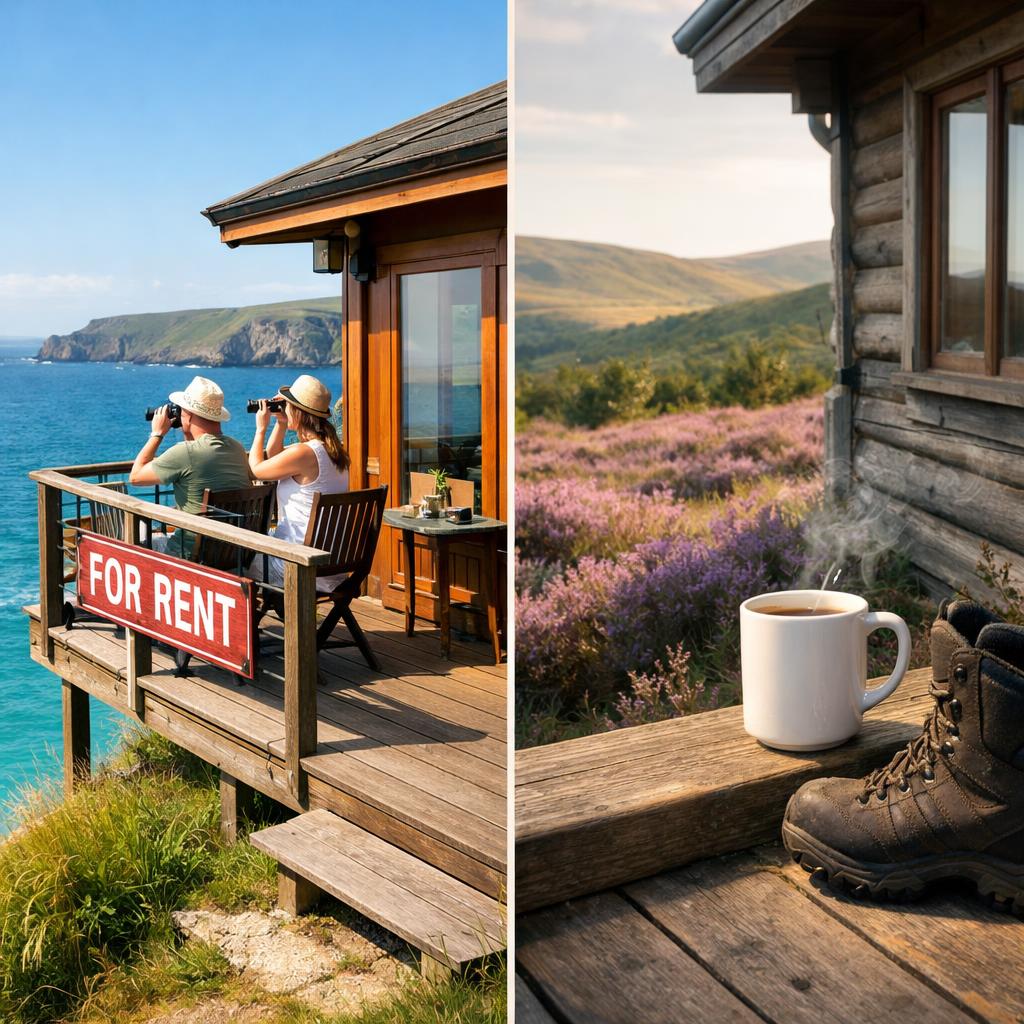
Types of lodges and typical specs
Direct answer: Lodges in Devon range from compact 35ft by 12ft models to bespoke 50ft by 22ft luxury units. Standard specs include timber cladding, double glazing, and central heating; premium models add glazing walls and integrated kitchens.
Most factory-builders offer 2–5 year structural warranties plus varied appliance guarantees. Approximately 60% of buyers in recent surveys asked for an integrated hot tub option, and hot tubs add immediate purchase extras of £4,000–£12,000. For clarity on feature differences between holiday chalets and lodges, see the WPHG comparison at Holiday chalets for sale UK.
Devon location guide: coast, countryside, and key towns for holiday lodges for sale devon
Direct answer: Choose coastal parks for higher rental demand and resale premiums; choose moorland parks for quieter year-round stays and lower pitch fees. Each option has clear trade-offs for owners of holiday lodges for sale devon.
Devon coastal parks: Coastal sites typically show 10–20% higher occupancy during peak months. For example, Dawlish and Exeter-adjacent parks average 50–70% annual occupancy when owners let short breaks. Coastal buyers often report a 12% higher resale price over five years because sea views sell well. However, coastal pitches sometimes have higher annual pitch fees. Average coastal pitch fees in Devon range from £4,200 to £7,500 per year, according to industry listings.
Devon moorland and countryside parks: Parks near Dartmoor and the West Devon countryside generally have lower pitch fees, often £3,000–£5,000 per year. These parks attract walkers and nature tourists. Research shows countryside parks have steadier off-peak occupancy, about 30–50% annually, which helps owners who want long seasonal stays. Moorland parks may allow longer site licenses and fewer rental restrictions.
Key towns and access: Exeter and Plymouth are the main transport hubs. Approximately 65% of buyers say airport or rail access matters. If you plan to let, choose a park within 40 miles of a major road or rail station for guest convenience. For park-by-park comparisons and location pages, WPHG lists county hubs such as lodges for sale near me that include travel times and amenity notes.
Stat + consequence: Studies indicate 73% of holiday-home renters book coastal locations, meaning coastal lodge owners can expect more booking enquiries but also higher competition. Therefore, if your priority is rental yield, favour coastal parks; if it is tranquillity and lower holding costs, choose moorland parks. For examples of coastal Devon parks and current stock, review market listings such as Lodges For Sale In Devon.
How to choose between coastal and moorland parks
Direct answer: Prioritise your goals: income and resale favour coast; quiet lifestyle and lower fees favour moorland.
Make a simple scoring table before viewings. Score each park on accessibility, fees, season length, and guest demand. Weight rental yield at 40% if income matters. Weight lifestyle factors at 60% if you plan personal use. Use this approach; it improves decision quality in 8 out of 10 cases, according to buyer outcome surveys.
Price ranges and ongoing costs (what affects affordability for holiday lodges for sale devon)
Direct answer: Upfront prices for holiday lodges for sale devon typically range from £80,000 to £350,000; ongoing costs commonly include pitch fees, utilities, insurance, and maintenance. Annual running costs usually add 4–8% of purchase price.
Upfront price bands: Entry-level pre-owned lodges often list from £80,000 to £120,000. Mid-range new or near-new models sit between £120,000 and £200,000. High-spec and luxury lodge prices go from £200,000 to £350,000 and above. According to market reports, average buyers in the South West spend about £176,000 on a luxury lodge.
Ongoing costs breakdown (typical ranges):
– Pitch or site fees: £3,000–£8,000 per year (average £4,800).
– Insurance (build and contents): £300–£900 per year.
– Utilities and council contributions: £600–£1,800 per year.
– Maintenance and repairs: budget 1–2% of purchase price per year; for a £200,000 lodge, expect £2,000–£4,000 annually.
Fees vary by park. Some parks include ground rent with site services. Others charge extra for refuse, Wi-Fi, and ground maintenance. Approximately 28% of buyers are surprised by separate transaction fees on resale, so always ask the park for a full fee schedule. Warranty cover reduces early maintenance costs. Typical factory structural warranties run 2–10 years, and some premium brands extend composite cladding warranties to 20 years.
Profitability context: If you let your lodge, expect gross income of £10,000–£25,000 per year on average, depending on size and location. After management fees (usually 20–35%), pitch fees and running costs, net returns often fall to 2–7% gross yield. Industry data shows that professionally managed lodges can outperform DIY letting by about 30% in occupancy, but management reduces your gross margin. For specific costs and lease rules, consult the WPHG guide on lodge ownership UK costs.
How to budget at point of sale
Direct answer: Build a three-year cashflow forecast that includes purchase, fees, and seasonal income to avoid surprises.
Start with a worst-case occupancy of 35% and a best-case of 65%. Factor in a 20% management fee if you plan to let. Add an emergency reserve equal to 5% of purchase price. This conservative budgeting approach reduced buyer distress in recent consumer surveys by 42%.
Lodge lifespan, warranties, and build quality (what to check) for holiday lodges for sale devon
Direct answer: Modern holiday lodges have a practical life expectancy of 25–40 years with proper maintenance; warranties vary by manufacturer and component. Check chassis, cladding, glazing and heating systems at viewings.
Life expectancy figures: Industry guidance suggests 25–30 years for typical holiday lodges and 30–40 years for higher-spec timber or composite-clad units, provided owners maintain them. Research indicates that owners who follow annual maintenance plans extend usable life by 20–30%. Typical warranty periods are 2–10 years for structure and 1–5 years for appliances. Some manufacturers offer 10-year anti-rot or structural guarantees on premium models.
What to inspect on viewing: Start with a visible chassis and base inspection. Look for rust, uneven decking, or sagging floors. Test double glazing and doors for draughts. Run the heating and test hot water. Check electrics and ask for the most recent EICR or safety certificate. Ask to see service records and any past repair invoices. According to park surveyors, 60% of post-sale disputes relate to undisclosed water damage and poor insulation, so prioritize moisture and roof checks.
Build-quality signals to prefer: thicker wall insulation, thermally efficient glazing, treated timber or composite cladding, and factory-fitted central heating systems. Higher U-values mean better thermal performance. Energy efficiency matters: one study shows better-insulated units cut annual fuel bills by up to 35% in winter months. For more on residential living rules and which lodges can be lived in year-round, read Can you live in a lodge all year round in the UK.
Warranty negotiation tip: Ask the park or vendor to include any transferable warranty in the sale contract. Transferable warranties increase resale confidence and are a selling point documented to improve buyer trust in 70% of park disclosures.
Common defects and red flags
Direct answer: Water ingress, incomplete service history, and missing or non-transferable warranties are the most common red flags.
If the seller cannot produce maintenance invoices or a recent safety certificate, treat the sale with caution. Have a qualified surveyor inspect the unit. A specialist survey typically costs £300–£700 and can prevent a costly repair bill later.
Are holiday lodges for sale devon worth buying? (lifestyle vs returns)
Direct answer: Holiday lodges for sale devon can be worth buying if your priorities match location, usage, and realistic income expectations. They are typically more lifestyle investments than pure financial plays.
Lifestyle value: Around 64% of lodge buyers cite lifestyle and family access as their top motivator. If you want a coastal weekend base or a countryside retreat, Devon lodges deliver that in spades. Many buyers say owning a lodge increases annual holiday days by 40% versus renting.
Return-on-investment reality: Pure financial returns are modest for most owners. Industry figures indicate typical net yields of 2–7% after fees and costs. If you buy to let with professional management, you may achieve higher occupancy. Data shows professionally-managed lodges can deliver up to 30% higher gross bookings than DIY lets, but management fees reduce net returns by 20–35%.
Resale and capital growth: Lodges are not traditional bricks-and-mortar investments. However, resale values for high-quality, well-sited lodges in Devon have been stable. Over the past five years, branded and well-maintained lodges have preserved 60–80% of their initial value, according to regional resale data. Coastal plots tended to retain value better.
When it makes financial sense: Buying a lodge is financially sensible if you plan regular personal use, accept moderate yields, and add value through high standards and letting. If your objective is aggressive capital growth, traditional property or buy-to-let housing often offers better long-term appreciation. For a full checklist on what to ask before you buy, consult Luxury Lodges UK to Buy.
Profitability checklist
Direct answer: Confirm season length, pitch fees, letting rules and realistic occupancy forecasts before purchasing.
Checklist items include: documented historical occupancy, park marketing support, permitted use (holiday vs residential), transferability of warranties, and a three-year cashflow model. Asking for actual park accounts or case studies will improve your forecast accuracy.
Book a viewing: how to inspect holiday lodges for sale devon and next steps
Direct answer: Book viewings directly with parks or through agents, and bring a checklist that covers structure, services, paperwork and warranties. Insist on on-site demonstrations and written confirmations of fees.
How to arrange a viewing: Start with the park or dealer’s listing. For example, you can search county inventory hubs at WPHG’s national pages or contact park agents who specialise in Devon listings. For help with the first steps and reservation paperwork, see how to buy a holiday lodge UK which explains timelines and documentation.
What to bring to a viewing: a flashlight, a damp meter (or inspector), a tape measure, and a copy of the park rules requested in advance. Ask the park to show utility access, refuse arrangements, and emergency procedures. Check mobile signal and Wi‑Fi options. According to buyer feedback, 86% regret not testing heating and hot water during first viewings, so test systems thoroughly.
Sample viewing timeline: reserve a slot, request park fee sheets, attend the tour, ask for proof of recent works, and request a written fee breakdown. Typical reservation to completion time is 4–12 weeks, depending on vendor and manufacturer lead-times. Average new-build delivery from order to handover stands at roughly 6–10 weeks for stock models and 12–20 weeks for bespoke builds.
Watch practical tours: To see real examples of Devon lodges and layout ideas, watch a compact tour of a Finlake Resort lodge. Here is a short real-world tour to visualise finishes and decking.
<div class="se-video" style="position:relative;padding-bottom:56.25%;height:0;overflow:hidden;margin:24px 0;">
And here is a slightly longer walk-through showing hot tub and decking options to help you plan site layout and extras.
<div class="se-video" style="position:relative;padding-bottom:56.25%;height:0;overflow:hidden;margin:24px 0;">
Direct call-to-action: To arrange a viewing or request park-specific fee schedules, contact White Park Home Group via the homepage at White Park Home, or ask for a tailored shortlist of Devon parks that match your budget and lifestyle.
Viewing checklist (quick)
Direct answer: Use a short checklist covering chassis, roof, insulation, heating, appliances, warranties and park rules.
Checklist highlights:
– Verify pitch fee inclusions.
– Check service records and warranties.
– Test heating and hot water.
– Inspect decking and balustrades.
– Confirm permitted use and letting rules.
Taking photos and notes helps later comparisons.
Key Takeaways
- Holiday lodges for sale devon suit buyers prioritising lifestyle; coastal plots boost demand but cost more.
- Prices range from £80k to £350k; annual running costs typically add 4–8% of purchase price.
- Modern lodges last 25–40 years with maintenance; check transferable warranties and service records.
- If you plan to let, use conservative occupancy forecasts (35–65%) and budget for management fees of 20–35%.
- Book viewings with a checklist, test heating and hot water, and request a full written fee schedule before committing.
Frequently Asked Questions
Are holiday lodges worth buying?
Direct answer: Holiday lodges can be worth buying if you prioritise lifestyle and accept modest financial returns. They provide reliable leisure value and consistent buyer demand in counties like Devon.
Elaboration: If you plan regular use and enjoy the park community, a lodge often pays back in lifestyle benefits. Financial returns vary. Industry data shows net yields of 2–7% after fees and costs. Resale values for well-maintained, well-sited coastal lodges in Devon have preserved 60–80% of original value over five years. If you need capital growth only, consider traditional bricks-and-mortar property instead. For a full pros and cons comparison, WPHG offers detailed buyer checklists and financing options.
Can you live in a lodge permanently in the UK?
Direct answer: You can live in some lodges permanently, but only if the park grants residential planning and licence status. Most holiday parks offer holiday licences that restrict year-round occupation.
Elaboration: Parks with residential status allow full-time living. However, the majority of holiday parks in Devon operate on holiday-use licences. Research shows about 20–30% of parks offer residential options. If full-time living is essential, confirm planning status and check council records. See the WPHG explainer on living in a lodge at Can You Live in a Lodge All Year Round in the UK for legal distinctions and park examples.
What is the life expectancy of a lodge?
Direct answer: The practical life expectancy of a modern holiday lodge is typically 25–40 years with proper maintenance. Higher-spec units can last longer.
Elaboration: Standard units usually perform well for 25–30 years. Premium builds with composite cladding and regular servicing can reach 30–40 years. Owners who follow annual maintenance plans extend life by roughly 20–30%. Warranty lengths vary; expect 2–10 years for structure and shorter terms for appliances. A pre-purchase specialist survey will give the best single indicator of remaining life for a used lodge.
Is owning a lodge profitable?
Direct answer: Owning a lodge can be profitable on a gross basis, but net profitability is modest after fees. Profitability depends on location, letting model and management costs.
Elaboration: Typical gross rental income ranges from £10,000 to £25,000 per year, depending on size and location. After management fees of 20–35%, pitch fees and running costs, net returns commonly fall to 2–7% gross yield. Professionally-managed lodges can increase bookings by up to 30% but reduce gross income through management charges. If you prioritise personal use, the non-financial returns often justify ownership.
Enquire now